
Article
78 performance review phrases to share effective feedback
Performance management
18 min read
Written by

The employee experience platform
People leaders have long struggled to answer a simple question: Do we have a high-performance culture?
A major reason the answer can feel elusive is that most organizations still define and measure performance too narrowly, focusing only on performance at the individual level. But individual performance naturally fluctuates and can only be sustained by a rare few. In our recent research, we’ve found that measures of collective performance – the performance of your organization as a whole – are far more durable.
To help organizations better understand and measure collective performance, Culture Amp created the Performance Culture Quadrant™ (PCQ). By mapping engagement against performance confidence, the PCQ provides a clear view of your organization’s performance culture. It uses survey results to sort organizations into one of four categories: Peak Performance, Engaged Skepticism, Strained, or Disconnected. The goal, of course, is to be in Peak Performance.
In this article, we explore what it means to fall in the top-right quadrant of the PCQ, also known as Peak Performance. Whether your organization is already operating in Peak Performance or working toward it, this guide unpacks the cultural traits, behaviors, and business outcomes that define this state – along with the practices that sustain it over time.
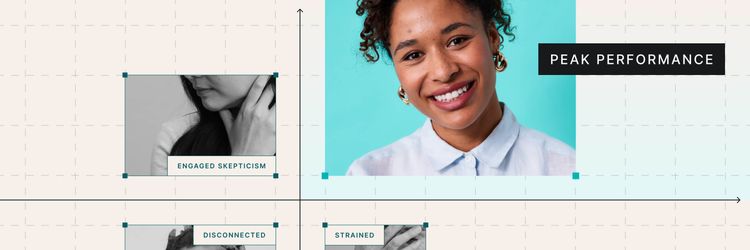
Companies in Peak Performance sit in the top-right quadrant of Culture Amp’s Performance Culture Quadrant™ – where high engagement meets high performance confidence. In this cultural state, employees bring energy to their work and believe their organization will succeed in the long term. That belief creates a stronger sense of connection, ownership, and motivation to help the organization achieve its goals.
Organizations in Peak Performance have higher goals than simply maintaining performance – they continuously work to improve it. Their people are more likely to take responsibility for business success, strengthen systems and processes, and look for new ways to increase impact. That’s what makes Peak Performance the ideal state for organizations looking to build a strong company culture and sustain long-term business success.
Reaching Peak Performance as an organization may sound challenging, but the good news is, this cultural state isn’t rare. In our analysis of 1,800 organizations, 44% landed in the Peak Performance quadrant, and 76% remained there a year later. For most companies, Peak Performance is both attainable and sustainable, and companies in any other cultural state can reach Peak within a year with the right focus and plan.
Answer the following questions to get a sense of whether your organization has a Peak Performance culture:
Are your employees excited to be a part of the company and bought into the company’s vision and strategy?
Do employees take responsibility for the organization's success by proactively improving systems and processes and innovating to increase impact?
Do teams role model the company’s values and lift up those around them without waiting for management to tell them what to do next?
If you answered yes to all three questions, you’re likely a part of a culture of Peak Performance! Keep reading to learn how this impacts key business metrics and the key levers that drive sustainable high performance. If this doesn’t feel like your team culture, don’t fret; there are many ways to build trust and accountability within your organization to help you reach Peak.
We identified Peak Performance as the ideal performance culture state using 15+ years of research and answers to 1.6 billion survey questions.
Culture Amp data shows that companies in the Peak Performance quadrant consistently see stronger business outcomes, including:
Higher performance: Peak Performance organizations have 21% more high performers than businesses in other quadrants.
Higher stock price: Public companies in the Peak quadrant saw median stock price increases of up to 21% over one year, compared to a median decline of -4% for companies in other cultural states. Over two years, that gap grows to an impressive 47%.
Increased retention: Peak companies reported a retention rate of 88% – the highest across all cultural states.
Want to learn more about the benefits of investing in your organizational culture? Check out our guide, Find your 47% advantage: Turning culture into strategy in the age of AI.
What sets Peak Performance organizations apart? They score strongly in three key areas:
Leadership confidence: Employees at these companies trust senior leaders and believe in the direction of the company.
Resource and goal alignment: Peak Performance organizations prioritize the work that drives company objectives and ensure teams have the people, resources, tools, and budget they need to succeed.
Clear vision and communication: Employees understand where their organization stands today, where it’s headed, and how their work contributes to success.
Peak Performance organizations score higher in these areas than companies in any other cultural state. In the next section, we’ll explore how organizations can strengthen these areas and build the conditions for sustained high performance.
Cultural states are fluid, not fixed. They show where your organization is today – and where you can focus to strengthen engagement and performance confidence over time.
For years, improving engagement scores alone was considered the goal. Today, sustaining Peak Performance requires a broader approach: creating the cultural conditions that help people and businesses thrive together.
Here’s a closer look at some of the most effective ways organizations can invest in their culture to strengthen engagement, improve performance, and sustain long-term success.
Peak Performance cultures encourage open, two-way communication. Employees feel safe speaking up, sharing ideas, and taking smart risks, while leadership prioritizes listening to employees and implementing their ideas. Feedback helps the organization surface better ideas earlier and address challenges before it’s too late.
One crucial part of an effective employee listening strategy is running ongoing employee surveys on topics like engagement, diversity and inclusion, onboarding, and offboarding.
Regular feedback helps organizations track changes in employee sentiment over time and identify areas that will have the greatest impact on improving the employee experience. Even better, regular surveys show your employees that you care about what they have to say and use their feedback to make meaningful change.
People perform at their best when they understand where the organization is headed and why it matters. Strong, transparent communication around strategy, priorities, and shared goals creates clarity, alignment, and momentum across teams. It also strengthens confidence in leadership and helps employees see how their work contributes to broader business objectives.
High performance depends on more than individual effort. Employees do their best work when they have the right people, resources, and tools to succeed. Broken processes, poor communication, and outdated systems can slow teams down and hurt morale over time.
That’s why Peak Performance organizations invest in giving employees the clarity, autonomy, and support they need to move work forward effectively. When people aren’t blocked by inefficiencies, they can focus on delivering meaningful results, collaborating better, and continuously improving how work gets done.
Culture Amp’s science-backed Culture Operating System helps organizations build these habits directly into everyday work:
1-on-1 conversations: Shared agendas, sentiment check-ins, and centralized people data – including feedback, goals, past conversations, and individual development plans – help managers and employees go beyond reviewing to-do lists and make the most of these regular check-ins.
Goal setting: Employees can see how their individual goals connect to broader organizational objectives, while managers can track progress and provide support when priorities shift or progress slows.
Recognition: Embedding recognition into day-to-day work helps create a culture that celebrates wins, reinforces company values, and motivates employees to do their best work.
Together, these tools can help your business build a culture that accelerates, rather than obstructs, your success.
Peak Performance cultures treat growth as an ongoing process and recognize that career development goes beyond promotions.
Experimentation, learning, and even failure are seen as essential to innovation and improvement. Employees receive high-quality feedback, opportunities to develop, clear pathways for growth within the organization, and the freedom to experiment and learn.
Culture Amp helps organizations support continuous development through tools like:
Coaching and development: Clear career paths and competency frameworks help employees understand how to grow and what opportunities are available to them.
Continuous feedback: Frequent feedback helps employees learn and improve in real time, so growth conversations happen year-round – not just during performance review cycles.
Personalized growth plans: Development plans help employees understand exactly what experience and skills they need to improve to reach the next stage of their careers.
Together, these practices help organizations keep employee growth and development top of mind all year long.
Peak Performance isn’t reserved for a select few organizations. It’s a cultural state that any company can work toward with the right focus, tools, and support.
Culture Amp helps organizations build high-performing cultures with science-backed, AI-powered solutions for engagement, performance, and development. Our platform gives leaders the insights they need to understand their culture – and gives managers and employees the tools to improve it.
Instead of guessing where your organization falls on the PCQ, use data to identify your unique culture type, understand what motivates your people, and uncover the opportunities that will drive sustained high performance.
Want to learn more? Explore the Performance Culture Quadrant™ or dive deeper into the three other culture states:

Unlock the 47% advantage: A guide for modern leaders.
Article
Article
Article