
Article
Employee attrition: What it is and how to calculate it
Employee engagement
9 min read

Written by

Writer, Culture Amp
As organizations grow, it becomes harder for leaders to stay connected to the people doing the work every day. This often means they have limited visibility into employees' experiences, challenges, and ideas.
That's where skip-level meetings come in.
A skip-level meeting is a 1-on-1 conversation between a leader and an employee who doesn’t report to them but is one or more levels below them in the organization. These meetings build trust, encourage open communication, and give leaders a better understanding of what's happening across their teams.
But successful skip-level meetings take more effort than sending a calendar invite. They require thoughtful preparation, asking the right questions, and a genuine focus on listening. In this guide, we'll explain what skip-level meetings are, why they matter, and how to prepare for them so you can have meaningful conversations with your teams.
Skip-level meetings are 1-on-1s between a leader and an employee who reports to one of their direct reports.
The most effective skip-level meetings prioritize listening over talking.
Successful skip-level meetings require preparation from both leaders and employees.
A skip-level meeting is a 1-on-1 conversation between a leader and an employee who sits below them but doesn’t report to them. These conversations help senior leaders build stronger relationships with employees they don’t get regular face time with, allowing them to gain a clearer understanding of what's happening across their teams and create opportunities for open, honest dialogue.
A skip-level meeting gives leaders the opportunity to:
Build stronger relationships with employees
Learn more about their work, priorities, and goals
Understand challenges and roadblocks
Ask about team dynamics and manager effectiveness
Recognize strong contributions and encourage growth
Gather ideas and suggestions for improving the team or organization
Give and receive candid feedback
A skip-level meeting isn't a replacement for regular 1-on-1 meetings between employees and their direct managers. It's also not a performance review, an opportunity to bypass a manager, or a forum for resolving day-to-day issues that should be handled within the team.
Instead, skip-level meetings aim to give senior leaders a detailed perspective of the employee experience. The goal of these conversations isn't to undermine managers or evaluate employees – it's to build trust, improve communication, and surface insights that help the entire organization grow and improve.
Skip-level meetings create value for everyone involved. They help employees feel heard, give leaders a clearer picture of what's happening across their teams, and provide organizations with insights that can lead to meaningful improvements.
Skip-level meetings give employees an opportunity to:
Build stronger relationships with senior leaders: Skip-level meetings help employees connect with leaders they may not interact with regularly, which can increase visibility, trust, and confidence.
Share honest feedback: Skip-levels give employees a dedicated space to raise their concerns, acknowledge what's working, ask questions, and offer ideas for improvement directly to someone who can drive organizational change.
Explore career growth: These conversations give employees an opportunity to discuss their goals, gain broader perspectives, and learn from experienced leaders.
Skip-level meetings enable organizational leaders to:
Understand challenges and team dynamics: Skip-level meetings provide firsthand insight into what's helping or hindering employees' success, so leaders can take swift, meaningful action to keep employees engaged.
Recognize strengths, support development, and better understand what different employees need to succeed: Leaders can acknowledge employees’ contributions, better understand their career aspirations, and see where additional support, stretch opportunities, or development conversations may help them grow.
Stay connected to the business: These conversations help ground leaders, forcing them to consider how high-level, strategic decisions affect employees’ day-to-day experiences and uncovering trends they might otherwise miss.
At an organizational level, skip-level meetings help:
Improve communication across levels. Skip-level meetings encourage transparency and help employees feel more connected to and more trusting of their senior leaders.
Surface ideas and opportunities. Employees closest to the work often have valuable suggestions for improving processes, products and services, client relations, and ways of working.
Build a stronger culture of trust. When leaders regularly listen to employees, organizations create a company culture where people feel heard, valued, and empowered to speak up.
Calendar invite sent? Ready to chat with your employee? Here are a few steps to ensure both participants are set up for a successful skip-level conversation.
Consider your employee’s perspective: Receiving a calendar invite from a senior leader or executive out of the blue can set off alarm bells. To avoid causing unnecessary stress, let the individual know ahead of time why you're meeting – whether it's to get to know them, gather feedback, or learn more about their work.
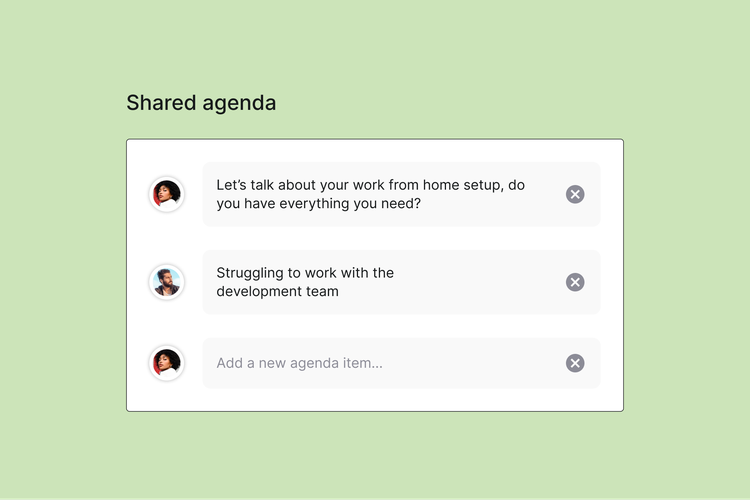
Better yet, send the employee a shared agenda and/or a list of questions you’ll ask, so they can prepare for the discussion. Culture Amp’s 1-on-1 conversations tool includes agenda-setting, which lets you and the employee collaborate on a shared agenda, so you can add discussion topics, questions, and notes ahead of your call. This not only lets everyone know what to expect and how to prepare, but also helps guide your discussion during the meeting so nothing gets forgotten.
Do your homework ahead of your meeting. Take a few minutes to familiarize yourself with the employee's role, responsibilities, current projects, and goals. Having this context will set you up to ask better questions and have a more meaningful conversation.
Start by making the employee feel comfortable. Spend a few minutes getting to know them, expressing your appreciation for their time, and reinforcing that this is an open conversation – not a performance review. The more psychological safety you create, the more honest and productive the discussion will be. In the next section, you’ll find sample questions to help you do this.
Come prepared with thoughtful questions, but let the conversation flow naturally. Your questions will impact the conversation’s direction, but aim to do more listening than talking. Leave plenty of time at the end of your meeting for the employee to ask questions and share feedback of their own.
Lastly, wrap up the meeting by thanking the employee for their openness and time. If they raised questions or concerns you couldn't answer during the meeting, let them know how and when you'll follow up. Closing the loop helps build trust and shows employees that their feedback leads to action.
Skip-level meetings shouldn't be a one-time conversation – they can help build an ongoing relationship and create another trusted channel for communication. Before ending the conversation, remind the employee that your door is always open. Encourage them to reach out if they have questions, ideas, or feedback outside of your scheduled meeting.
The best skip-level meetings feel like conversations, not interviews. Not sure what to discuss in a skip-level meeting? Use these sample questions as a starting point, then ask follow-up questions to better understand the employee's perspective and dive into the specifics of their situation or suggestions.
Breaking the ice and getting to know your employees creates a more comfortable environment for honest conversations and lays the groundwork for psychological safety in later meetings. Before diving into more strategic topics, start with a few personal and role-focused questions to get the ball rolling.
What do you enjoy most about your role?
What's been a big professional win for you recently?
What do you enjoy doing outside of work?
What's a recent project you're particularly proud of?
What's one thing you wish more people understood about your role?
How are things going on your team?
What's one accomplishment you're hoping to achieve this year?
Skip-level meetings are a great opportunity to understand an employee's aspirations and identify ways the organization can support their development. Get to know their plans for the future by asking:
What skills or experience would you like to develop?
Where do you see your career in the next two years?
If you could design your dream role, what would it be?
What kinds of projects would you like to work on more often?
Is there anything preventing you from reaching your career goals?
Do you feel like you have opportunities to grow here?
What support would help you be more successful?
An employee’s team has a significant impact on their experience at work. These questions help uncover how employees experience collaboration, communication, and day-to-day work, so you can gain insight into what’s working and where improvements can be made.
How would you describe your team's culture?
What helps your team do its best work?
What's the biggest challenge your team is facing right now?
Is there anything slowing your team down?
How effectively does your team communicate?
How well do you understand the work your peers do?
Does your team have clear, measurable, and attainable goals?
If you could improve one thing about how your team works together, what would it be?
These example questions can help you understand whether employees are receiving the support they need without turning the conversation into an evaluation of their manager.
How often do you receive helpful feedback from your manager?
How does your manager support your professional growth?
How clear are your goals and priorities?
How comfortable do you feel sharing a different opinion with your manager?
Do you feel your manager advocates for you and your team?
Is there anything else your manager could do to support your success?
Do you feel you have the autonomy you need to do your best work?
Do you feel recognized for your contributions?
Do you feel comfortable asking your manager for help when you need it?
Skip-level meetings also help leaders understand how employees feel about the broader business, strategy, and culture.
Do you understand how your day-to-day work contributes to our company's goals?
Do you feel you understand where the organization is headed?
What are your thoughts on the direction the organization is headed?
Do you trust our leadership team?
How could leadership improve communication?
How would you describe our company culture?
What's one thing we could do to make this a better place to work?
If you were CEO for a day, what's the first thing you would change?
If your skip-levels take place during a period of change, it can be helpful to ask employees how they’re handling the news and get their thoughts on how the updates were enacted.
How are you feeling about the recent changes?
Do you have any outstanding questions that haven’t been answered?
How effective was our communication throughout the change?
Have you felt supported by your manager and team during this transition?
Are there any ways we can better support you during this time?
Looking back, what's one thing we could have done differently to make this change easier?
How has the change affected your workload or priorities?
How are you feeling about the future of the team and organization?
If you’re thinking, “That’s a lot to fit into such a short meeting,” don’t worry. We’ve put together an example agenda of what a 30-minute skip-level meeting might look like.
3 minutes – Get personal: Start with casual conversation. Thank the employee for their time, and explain the purpose of the meeting to help them feel comfortable. You can use some of the sample questions above to ask about their hobbies or interests outside of work to get to know them on a more personal level.
5 minutes – Dive into their work: Next, transition to talking about work by asking about their current projects, recent wins, challenges, and what they've been focused on lately.
15 minutes – Explore feedback and insights: Discuss team dynamics, leadership, career growth, and any ideas they have for improving the employee experience or organization. Ask follow-up questions, and spend more time listening than talking.
5 minutes – Answer their questions: Give the employee space to ask questions, share additional feedback, or raise topics that weren't covered earlier in the conversation.
2 minutes – Wrap up and discuss next steps: Thank the employee for their openness, summarize any action items, and explain how you'll follow up on any questions or feedback they shared.
Keep in mind that this is a sample template. Keep your agenda flexible in case a topic comes up that you need to explore in more depth. Just go with the flow, and remember that you can always schedule a follow-up call or touch base asynchronously to cover more details, if needed.
Receiving a meeting invitation from your manager's manager can feel unexpected, but before you think, “Oh gosh, have I done something wrong?”, just breathe. Skip-level meetings aren’t looking to test you or evaluate your performance; they’re designed to strengthen communication, build relationships, and give leaders a better understanding of the employee experience.
To calm your nerves and get the most out of your conversation, spend a little time preparing beforehand with these tips:
Think about what's been going well in your role and where you've encountered challenges. Consider your workload, team dynamics, communication and collaboration with other departments, and any roadblocks that make it harder to do your best work. Bringing specific examples will make your feedback more actionable.
If your leader shared discussion topics ahead of time, take a few minutes to prepare your responses. You don't need to script your answers, but having a few talking points ready can help you feel more confident and ensure you don't forget anything important.
Skip-level meetings are a great opportunity to discuss your professional development. Reflect on the skills you'd like to build, the kinds of work you'd like to do more of, and where you hope your career will go over the next few years, so you can discuss growth clearly and confidently.
Skip-levels are designed to be two-way conversations. While you can count on the senior leader asking you questions, you’ll also want to come prepared with a few of your own. Consider asking about the organization's direction, leadership priorities, or upcoming changes. You can also ask about career development, cross-functional opportunities, or how your work contributes to the company's broader goals.
If you're asked for feedback, don't be afraid to share it. Be respectful, specific, and solution-oriented, but don’t be afraid to tell the truth. Your leader can’t improve what they don’t know, so being honest helps them understand what's working and where improvements can be made.
Want to make your skip-level meetings more effective? Follow these best practices to build trust, gather meaningful insights, and lead more intentional conversations.
There's no one-size-fits-all cadence, but consistency matters more than frequency. Depending on the size of your organization and the number of direct reports beneath you, you might consider scheduling skip-level meetings monthly, quarterly, or twice a year. The right cadence depends on your team size, structure, and what’s happening in the business, but a regular rhythm matters more than a perfect formula!
Employees are more likely to share honest feedback when they know they'll be listened to respectfully. Set expectations around what will stay private, what may be shared, and how follow-up will work. Reinforce that the meeting’s purpose is to listen to and learn from their experiences. This can set your employees at ease and encourage them to speak more freely.
Skip-level meetings aren't meant to be a performance assessment for the employee or their manager. While employees may naturally share feedback about their manager or team, focus the conversation on understanding the employee's experience, not gathering evidence to evaluate someone else's performance. Avoid putting employees in an uncomfortable position, and respect the relationship between managers and their direct reports.
Skip-level meetings shouldn't be only for your higher-performing employees. Give everyone an opportunity to connect with senior leaders to create a more inclusive experience.
Come prepared with questions, but don't fill every minute of the agenda. Leave time for employees to ask their own questions, raise topics that matter to them, and guide parts of the discussion. Some of the most valuable insights often come from unexpected tangents.
The meeting doesn't end when the calendar invite does. If you committed to finding an answer, making an introduction, or following up on a concern, do so promptly and let the employee know. Even if you can't act on every suggestion, letting employees know you heard them and explaining what happens next builds credibility and encourages future feedback.
When done well, skip-level meetings do more than strengthen communication between leaders and employees – they build trust, surface valuable insights, and create opportunities to improve the employee experience. By approaching these conversations with curiosity, empathy, and a willingness to listen, leaders can better understand what's happening across their organization and empower employees to share their perspectives.
The right tools can make those conversations even more effective. With Culture Amp's 1-on-1 conversations, leaders and employees can create shared agendas, keep track of discussion topics, and capture action items in one place. That means less time preparing for meetings and more time having meaningful conversations that strengthen relationships and drive continuous improvement.
Whether you're introducing skip-level meetings for the first time or looking to improve your existing approach, giving leaders and employees the right structure can help every conversation lead to better outcomes.

Request a demo today to empower your leaders and employees to conduct better skip-level meetings – and much more.
Request a demo today to empower your leaders and employees to conduct better skip-level meetings – and much more.


Unlock the 47% advantage: A guide for modern leaders.
Article
Article
Article