Why sharing gender pronouns is important in the workplace
Written by

Senior Content Marketing Manager, Culture Amp
Creating a diverse, equitable, and inclusive workplace is far from easy, but we can't let perfection be the enemy of progress. There are many ways to bring your DEI strategy to life, but one major (but simple) step you can take to promote inclusivity is enabling conversations around gender pronouns.
Gender pronouns are the words people use to refer to themselves (i.e., he, she, they). They were also once referred to as "personal gender pronouns" or "preferred gender pronouns," but there has been a strong shift away from those two terms. GLSEN explains, “This change was made because a person’s pronouns are not just preferred ... They're the pronouns that must be used.”
Aubrey Blanche, Head of Equitable Design at Culture Amp, further elaborates:
"Beginning the conversation around sharing your pronouns is a simple way to normalize not assuming someone's pronouns or gender – it's one of the cornerstones of an inclusive culture."
Today, about one in five Americans say they personally know someone who prefers a pronoun other than "he" or "she," and this number is only growing over time. Furthermore, about 1 in 4 LGBTQ+ youth – the workforce of the future – report using a pronoun that falls outside the gender binary.
This means that understanding and respecting gender pronouns is increasingly vital for any organization trying to build a truly inclusive and equitable workplace.
Why are gender pronouns important?
If you've never had to worry about the pronoun someone uses to refer to you, specifying or sharing gender pronouns might not seem necessary. "For most people, their pronouns simply aren't a big part of their experience. But for people who are constantly questioned about their gender or are misgendered, the experience can leave them feeling excluded and alienated," explains Aubrey.
And gender pronouns matter – studies have found that affirming a transgender person's pronouns can help lower depression and raise self-esteem and well-being. Meanwhile, being misgendered and/or misnamed is associated with feeling disrespected and invalidated.
That's why asking for, remembering, and using someone's gender pronouns is essential. You can't assume anybody's gender pronouns simply by looking at them. Some people may identify with genders different from the sex assigned at birth. Meanwhile, others do not identify with any gender, while others may identify with multiple genders.
The table below provides examples of gender pronouns from the Lesbian, Gay, Bisexual, Transgender, Queer, Intersex, and Asexual Resource Center at UC Davis.
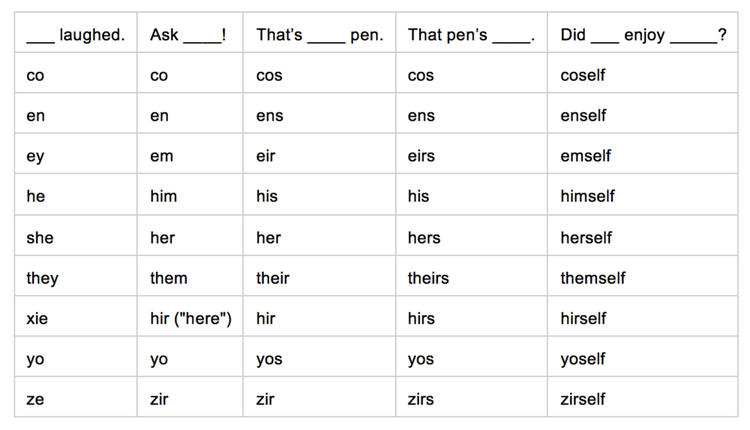
Using the correct pronouns is a form of basic respect and validation. Leaders who support and model the use of gender pronouns in their own workplace can go a long way in fostering an inclusive culture where everyone can belong.
How do I ask someone about their gender pronoun?
As part of an introduction or icebreaker at work, you can say, “Tell us your name, your role, and if you’re comfortable, your gender pronoun.”
You might hear gender-neutral pronouns like “they, them, theirs.” In other cases, people may prefer that you use their name. In a one-on-one conversation, the best way to ask is with a straightforward: “What are your gender pronouns?” or “Can you remind me of which pronouns you like for yourself?”
What happens if I use the wrong gender pronoun?
If you realize it at the moment, correct yourself. Apologize and restate the correct pronoun, “Sorry, I meant she.”
If you realize your mistake after the fact, apologize in private. Don't dwell on your mistake - it's not productive. It's also inappropriate to make the person feel awkward about the situation, nor should they feel responsible for comforting you. In other words, it's your job to remember and respect someone’s gender pronouns. The best apology is to be better in the future.
How to promote inclusion through gender pronouns
1) Include gender pronouns in e-mail signatures and work profiles
An easy way for companies to introduce gender pronouns into the conversation is to include them in email signatures. This action serves as a reminder internally and builds awareness externally.
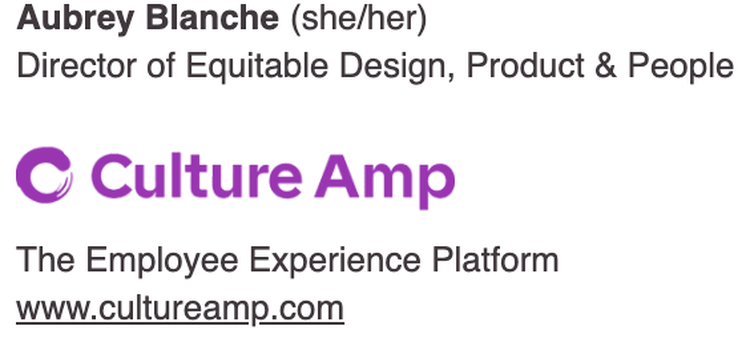
When asked why she chose to add gender pronouns to her e-mail signature, Aubrey explained, “Adding pronouns to simple but visible parts of your 'work-life' may be a small action, but it can have an incredible impact by signaling to trans, non-binary, and gender non-conforming people that they belong.”
Of course, gender pronouns can also be included in other areas, such as:
And if you're an individual whose company currently does not ask for people's gender pronouns, you can be the one to start the conversation. A small, easy way to get started is – you guessed it – adding your gender pronoun to your e-mail signature, LinkedIn profile, etc.
2. Make sharing pronouns the norm
Sharing pronouns may not come naturally for cisgender employees, but it can be learned and normalized as part of the company culture.
This tip particularly pointed at leaders and managers, because they have an outsized influence on the rest of the organization. When someone at the top opens a conversation with, "Hi, my name is _____, and my pronouns are _____," people are more likely to feel comfortable sharing their own pronouns.
The best leaders understand the importance of modeling the behaviors they want to see. If promoting inclusion through gender pronouns is a priority, the practice must be consciously incorporated into the organization's default way of working.
3. Create consequences for intentional misgendering or pronoun misuse
Using the wrong gender pronouns or misgendering is a microaggression – even if someone didn't do it intentionally. These cases can often be solved internally without requiring organizational intervention.
However, there are unfortunate situations where people may intentionally deadname or use the incorrect pronoun for someone. In this case, we recommend including deadnaming and incorrect pronoun usage in your formal definition of harassment and reflecting these in your policies. Doing so will set a firm expectation for respect and inclusion of trans, nonbinary, and gender non-conforming employees.
4. Embrace gender-inclusive language
Gender inclusivity goes beyond just using the right pronouns. It extends to how we speak, write, or communicate ideas about people across the spectrum of gender identities – in other words, to language itself. To foster a truly inclusive and welcoming workplace, it's critical to promote and prioritize gender-inclusive language.
According to the United Nations, using gender-inclusive language means "speaking and writing in a way that does not discriminate against a particular sex, social gender or gender identity, and does not perpetuate gender stereotype."
Below are a few examples of gender non-inclusive language and alternatives for your workforce to consider:
| Language to reconsider | Alternative term to use |
|---|---|
| Hey guys | Hey everyone/folks |
| Spokesman | Spokesperson |
| Salesman | Salesperson |
| Wife/husband | Partner/spouse |
| Maternity/paternity leave | Parental/family leave |
| Man up | Be brave |
Taking inclusion one step at a time
Adding gender pronouns to your company email signature is a significant but easy first step to building gender inclusivity in the workplace. It brings awareness to something many people might not have considered before. Another way to build inclusion in the workplace is by asking leaders to model and normalize the act of sharing pronouns. Finally, it's worth considering creating formal, defined consequences for anyone who may purposefully and/or maliciously call someone by the wrong pronoun.
There's always more work to be done to create a truly diverse, equitable, and inclusive world of work, but the most difficult obstacle is often getting started.

Build a more diverse, equitable, and inclusive world of work

Unlock the 47% advantage: A guide for modern leaders.
What's next
![]() View article
View articleArticle
Employee attrition: What it is and how to calculate it
Employee engagement9 min read![]() View article
View articleArticle
Continuous learning: What it is and how to encourage it
Employee development12 min read![build high performance cultures not heroes]() View article
View articleArticle
How to build a high-performance culture, not more heroes
Employee development7 min read