Podcast
Data science, empathy, and the art of humanizing finance at Nasdaq
Employee experience
36 listen
Patagonia pays bail for employees arrested at climate protests. It once ran a full-page ad telling customers not to buy its own jacket. And it will leave a role unfilled for a year rather than hire the wrong person. Most companies talk about purpose. Patagonia builds the systems to back it up. Even when that means holding a lot of contradiction.
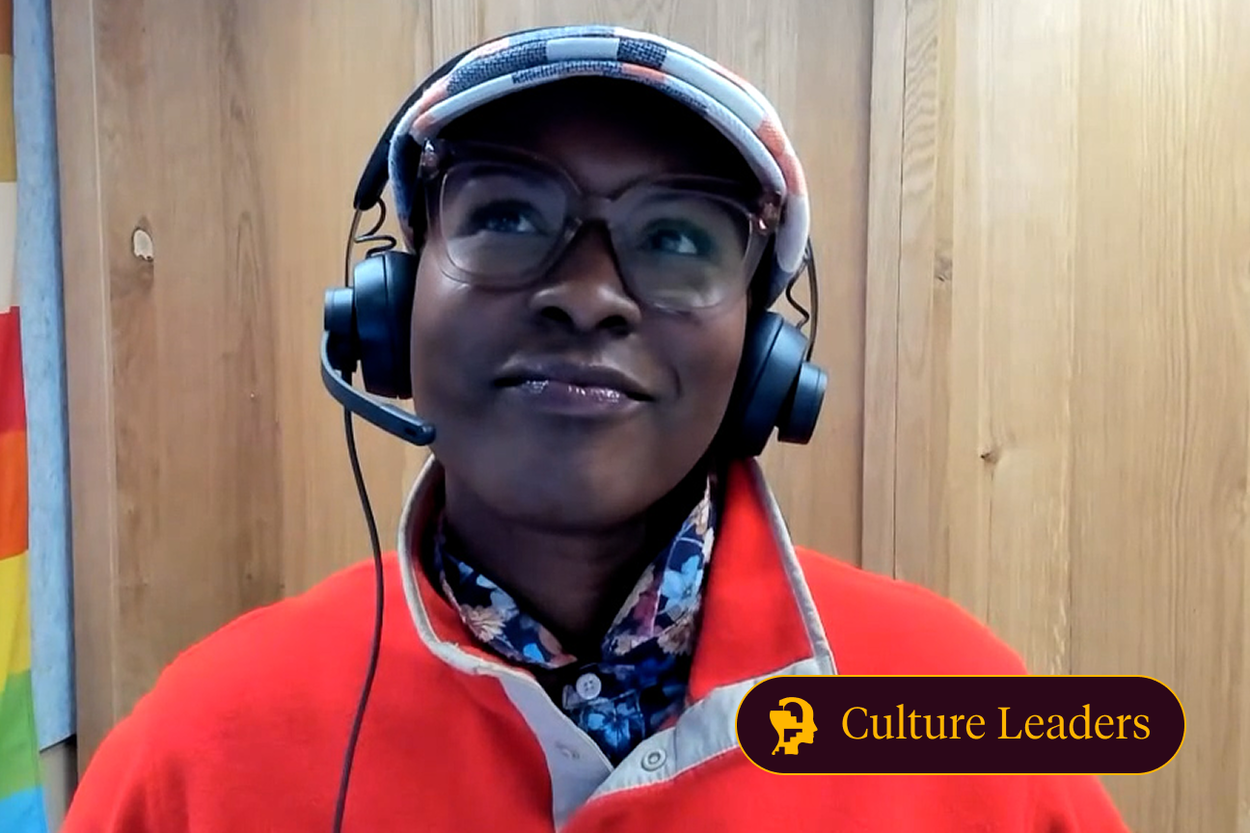
In this episode, Teresita Richard, Chief People Officer at Patagonia, joins Culture Amp's Justin Angsuwat to unpack how the company protects a culture built by climbers and surfers while scaling it across nearly 4,000 employees worldwide. From "liberating structures" that replace bureaucracy with just enough guardrails, to a hiring philosophy built on alignment over "fit," Teresita shares what it really takes to stay radical, human, and honest.
Show notes:
An anti-corporate corporation: Almost three years into the role, Teresita is still learning to "decorporatize" her own language, stripping out jargon to speak in the plain, human terms that match Patagonia's culture.
Voice of the employee: Frequent pulse surveys track an engagement index alongside deeper signals like trust, confidence, and open two-way dialogue, paired with conversation circles for more immersive listening.
Liberating structures, not bureaucracy: Patagonia constantly asks whether a policy is truly necessary, aiming for just enough structure to guide decisions without limiting autonomy.
Redefining performance: Rather than lean on traditional metrics, Patagonia frames performance around contribution, impact, and accountability to community, careful not to be "extractive" of its people.
Philosophy over onboarding videos: New hires attend philosophy workshops rooted in a storytelling tradition, while long-tenured employees mentor newcomers through the Legacy Collective.
Hiring for alignment, not fit: With around 10,000 applicants for just 17 summer internships, Patagonia looks past the resume to hobbies and passions, seeking people aligned with purpose rather than a homogenous "culture fit."
Key takeaways:
Culture doesn't scale by copy-paste. Global values need local translation. Patagonia avoids one-size-fits-all policy in favor of grounded principles that flex by region.
Question every policy's "why." If a rule doesn't serve people or the planet, that's reason enough to change or remove it.
Performance can be redefined without being diluted. Contribution, impact, and accountability replace extractive metrics, and infusing fun and humor keeps hard work sustainable.
Alignment beats fit. Hiring for shared purpose, not sameness, keeps a values-driven culture diverse rather than homogenous.
Find your truth tellers. Honest feedback from people who genuinely care is the fastest way to unlearn corporate habits and stay authentic.
Genuine care is a retention strategy. When employees trust that a company's purpose is real, not a slogan, they speak up, bring ideas, and stay engaged — even when the place isn't perfect.
If you've enjoyed this episode, consider checking out more of our podcast. You can follow us on Spotify, Apple podcasts or Youtube.
Justin Angsuwat: [00:00:00] Most companies say they're purpose-driven. Patagonia actually pays bail for employees who get arrested at climate protests. Wow . This is a company that took out a full-page ad telling customers not to buy their jacket, a company where they'll leave a job opening unfilled for a year if they haven't found the right person, and somehow they've scaled this globally without watering it down.
How do you keep and protect a culture built by mountain climbers and surfers who literally left midday to go catch waves while putting in place systems that a modern global company needs to function? Teresita Richard, chief people officer, is the person holding that tension while they scale. How do you stay radical when radical doesn't scale?
This episode isn't about what Patagonia says they do, it's about what actually happens behind the scenes, the hard calls, the uncomfortable trade-offs, at what it costs to do what you say. G'day. I'm [00:01:00] Justin Angsuwat, chief people and customer engagement officer at Culture Amp. I'm here with Teresita Richard, chief people officer at Patagonia, the company that proves that you can be radically purpose-driven and wildly successful at the same time.
Now, Teresita, I know you're used to pretty unconventional approaches at Patagonia, and so I'm gonna start with something a little bit different. So we've got conversation cards we've developed with the incredible psychotherapist Esther Perel. They're designed to go deeper than your usual interview questions, like the, the two truths and a lie.
Want to draw a card and see where it takes us? Let's do it. Let's do it. All right. Great. Well, you know what? I've, I've drawn... I'm gonna draw three, and take your pick and we'll see what, uh, what you go with, and I would love to hear your answer. So the first one is the most unexpected compliment I've received at work.
Teresita Richard: Um, the next one is, if I could start my [00:02:00] career over, dot, dot, dot, or the work advice I'm glad I ignored. What takes your fancy? You know, I think I'll start with the work advice I'm glad I ignored Ooh, I love that one. Juicy I've always had this passion for people, and there was an opportunity before me that was a role in diversity and inclusion and belonging, and I went and, you know, talked to someone that I, you know, highly respected and trusted around, do I go down this path?
Do I take this opportunity? Do I make this leap? You know, I'm passionate about this work. Um, what do I do? And they told me not to take it because they thought that I could get, um, limited or pigeonholed into this work. And I thought about it for a long [00:03:00] time that, you know, talked to a few other people that knew me well, and I did pass on an opportunity in that moment.
And then as life does, the opportunity came back around. And, um, at that time I thought, this is the second time that this has come to me. This is something I'm deeply passionate about, just how we human, how we do the things that we do, and creating opportunity for everyone. And I thought, you know what, I'm just gonna take this leap.
I'm gonna take this leap and we'll see what happens. And I did, and I'm so glad I did because it opened so many doors to do work beyond what my current role was. And, um, I don't think I'd be in the place that I am today if I did not ignore that vi- advice and, uh, take on that opportunity. I love that. So important to follow your passion, and it's gonna be such a great segue into the conversation that we're gonna have today about all things Patagonia and your role there.
But before we get into any of that, can you tell us about [00:04:00] your journey to Patagonia? So journey to Patagonia, I started actually my career, and I, I go back to this. It's a long time ago at this point, but I go back to this 'cause it's, it's an important part of my story. I started my career as an engineer.
I'm an industrial engineer by background. Um, and I've always had this passion around people, in particular, why we do what we do. What is it that makes us tick? And when you get a bunch of us together, what happens? And what I realized is that I am a self-proclaimed people geek. I love all things human. And so I went from being an engineer to thinking about how do I combine these passions, these, um, loves in my, in my work, and that brought me to the work of human resources.
I realized I love the, the science of people, and I love the creative aspect of creating environments for all of us to thrive and grow. And I was at a place where, [00:05:00] um, I was just really thinking about, you know, what, what's next in the future, and how do you think about career? How do you think about how all these pieces happen?
And I was doing work around inclusion and belonging really globally and had this outreach from Patagonia, and they The thing that caught my eye was, um, in the, the job description. It said we, we're hiring for our next chief people and culture officer, and we want to embed equity and justice into how this work is done.
And I've always had this philosophy that the work around people has to be embedded into how you do your business. And I've been, um, drawn to Patagonia for a long time because of the legacy, because of the, the history and what some would say is radical, but approach to environmentalism and using the business for good and being able to take on bold and bodacious, really hard goals around [00:06:00] our planet.
Justin Angsuwat: And I thought, this is a company that I would totally want to be a part of, and I felt like I'd have the autonomy and the creativity and the community space to be able to do some hard things around people. What an incredible journey. I mean, a lot of your early journey, um, really resonates with me. You know, I graduated with, uh, a Bachelor of Computer Science, so trained as a software engineer and designed to kind of think in a certain way.
And what really drew me to the people space was the unpredictability of humans. And so I'm really curious for, for a company like Patagonia, how do you actually measure culture? Like, what, what do you do internally? Like, what are the metrics or the signals? Like, how do you know everything's on track at Patagonia?
Teresita Richard: Well, I think one of the beautiful things about Patagonia is that we hire people that are deeply passionate, and they are activists. Um, they care deeply about the planet, the environment, the people that they work for, community, and that [00:07:00] shows up. So, um, where some companies may say, like, "We're struggling to get people to tell us how they feel," we do not have that problem at all.
Um, really, and I love it. It is, it is truly a gift. And we do a few things. One is we have introduced a voice of the employee program, and it's really about pulsing and having regular frequent conversations with our people to understand what their experience is, to understand what engagement looks like, what is motivating them, where they think we are strong, and also where we have work to do.
And so, um, through this regular pulsing that we've been able to, um, really get underway, we are able to look at things like what's our engagement index. So we're not looking at one question, but we're looking at a series of questions to help us understand engagement, to help us understand if people see this as a place that they want to work, and that they see themselves at, you know, not just in the [00:08:00] current state, but for the next few years.
Um, and we also look at things like, I feel highly valued in my work. There's open and honest two-way dialogue or, you know, things like decision-making. And so we're able to look at all of those various factors to understand what experience people are having And we all know as, as, as we kind of share this love of, of the data, we know that when you're asking a, a question, you get what is someone's experience in that moment.
Um, and so that information, we try to make sure that we're doing it frequently so that it's fresh, but we pair that with the deeper way of listening, more immersive listening, whether that's through conversation circles or other ways of soliciting feedback. So we can check not just what's coming through in the survey, but we can also see, are we making progress?
Are we tackling the things that are most important to our people? And then we have a few of those measures we're able to follow along to see are we getting better. Um, and you know, it's, it's a work in progress. [00:09:00] We're not a perfect organization, but we are deeply committed to not just listening, but acting on what we hear.
Justin Angsuwat: And so it's not just about getting like a one magical signal. It sounds like you, you're getting a number of different signals, and you need to make sure you get that frequently, but then there's also the diving deeper into understanding what sits behind that data. Do you have a measure most recently that's kind of popped up to you that's been quite revolutionary or kind of opened your eyes on something, like, as, as one of those measures or questions become more important over time for you at Patagonia?
Teresita Richard: Yeah. I, I would say that we're in the, the early stages. Um, and, you know, a few of the things that we're looking at are, like, open and honest two-way dialogue. It's really important for us to be able to have a continuous conversation with our people, and so we've called that out as something that's important for us to follow along with.
And then I would say the other piece that we're really looking at is, um, trust and confidence. Um, in a world [00:10:00] where so much feels like it's uncertain, um, and can feel, you know, sometimes chaotic and upside down, we often look to our places of work, um, for... as a place that we can, we can trust. And so we're actively working on, like, how do you build that trust?
Justin Angsuwat: How do you build that confidence? What does that look like? How do you really, like, show up in a, in a honest, transparent, connected, uh, way with your people? I'm so curious about how you've been able to scale something like that. I mean, there's so much tension to hold in there, especially around your values, between your heritage and kind of where, where you've been and where you came from, and the growth of where- what's expected of your organization.
And, um, don't know about our, our listeners, but for me, Patagonia's culture is absolutely legendary. Now, how do you balance kind of this spirit of the original radical values of which, you know, uh, activism or transparency might be a big part of it, with structure or policies that you [00:11:00] need to just run a massive global organization?
Teresita Richard: How do you balance the two? Yeah. You know what? I think that that's an active tension that we live with. One of our, uh, previous CEOs who's very dear to us, Chris Tompkins, has said that working at Patagonia or life at Patagonia, I'm paraphrasing, is like swimming in a sea of contradictions. Um, in the sense that there are these tensions that we're constantly navigating, right?
Like, as we get bigger, how do we hold on to the ethos of, um, let my people go surfing, which is really important to us, but we know that that doesn't look the same everywhere. So are we trying to just force fit something or are we really getting local? And so this notion of there are these kind of global universal values and, um, tenets and philosophies that are deeply important to us, but they show up in a very local way.
And so I think what becomes really important is not trying [00:12:00] to, um, create a one size fits all, but to really get grounded in these are the values and here's what that- Looks like and feels like, um, but we're not trying to create a homogenous experience, and I think that that piece becomes really important to understand, and we're constantly in this battle of are we creating bureaucracy?
'Cause we don't want to do that. Uh, we want to replace bureaucracy with something much better. So we're constantly in this battle of, like, is this policy absolutely necessary? Um, and then how do we do that in a way where... These are not my words, so I wanna give credit to the right person, but this, this concept of these liberating structures, where it's just enough structure so you understand, um, how we want to be able to go about said thing, but it's not so much structure that it is, um, limiting in how we can, how we can operate.
Justin Angsuwat: So grounding in your values, but also allowing for, for [00:13:00] local adjustments there. But one thing that really struck me was that in a world of, you know, chaos or a world where there's, uh, there's a lot changing around the world, it's really easy and natural for companies just to put in a lot... place a lot more structure and a lot more process just for the sake of it.
Teresita Richard: But what I'm hearing is this counter-tension to, like, do we actually need that, and will it actually liberate us by doing that, rather than we just do it because it sounds good and easy to implement another process. Yeah. I mean, I, I love what you're saying there because I think often it's about control.
Like we want, we want some control. We don't want things just to be wild and wildly different everywhere. And so it really is a push for ourselves to say, like, what's the, what's the why behind this policy or this practice? We also have a value around integrity, and it's where you're really having the honest conversation and you're questioning.
Justin Angsuwat: And that means that you question [00:14:00] why you've put these practices and these policies in place, and sometimes you've put something in place and you need to adjust it or evolve it or change it, and that's okay. And so I think the, the grounding and values part becomes so important. There's a lot of tension in there, and I love the analogy of the sea of contradiction.
Um, one thing that's top of mind for a lot of companies, CEOs, CHROs now, is around performance. It's over... It's been, like, a topic we haven't been able to avoid for the last couple of years. And so again, navigating these types of tensions or contradictions, what does sustainable high performance look like at Patagonia?
Teresita Richard: You know, how do you balance the demand of driving results with a culture that values, you know, surfing at lunch and, and work-life balance in general? Like, are the two in tension or, or how do you manage both of those expectations? Yeah, I think that's a great question, and it's one that we absolutely experience the tension.
And I think that there's one piece which is [00:15:00] A world where you think, "Oh, everyone's just going surfing at lunchtime," or... And that's not, that's not the case. It's not the case. But you do see things like, you know, how can we go walk together? I, I will tell a story, which is Patagonia is probably the first place I've been at where I've...
Or on day one, I was hearing the conversation of are we being extractive? And the conversation was actually in relation to our people. Like, we don't want to be extractive to our people, to the Earth. Like, how do we think about this in a different way? And that creates a tension when you talk about performance in maybe a traditional way.
And one of the things we're really challenging ourselves on is when we talk about performance, what do we really, really mean? And trying to break that down. And that is what we're talking about is contribution, and we're talking about impact. And we're talking about community is also an aspect that's incredibly important to us as a company.
But are [00:16:00] we, you know, accountable to our community, accountable to each other? Can we depend on one another? Are we reliable? How are we going about, um, doing the various things? It's not just about what you do, but it's also very important around how you do that. And there is a tension which I think shows up because we're human, right?
Which is if you're, if you're gonna be in a place where contribution is high, impact is high, the accountability we have to one another is high, it also requires that we're honest in our conversations with one another. And that can be, on a human level, kind of a, a scary, vulnerable thing. And it's one of the pieces that we're actively working on, which is, you know, like, how do you strengthen feedback?
How do you strengthen, um, conversations? And, and not just something that's, like, corrective feedback, but giving praise in a way that's specific and helps you to understand this is the thing we wanna see [00:17:00] repeated. Um, and then as we're doing that, how do we infuse some fun and some joy? We're tackling really hard challenges and hard problems, and, um, bringing a bit of that, you know, that Levity, humor is a big thing for us too.
Justin Angsuwat: Bringing those things into the day, into the day-to-day, I think are also a part of that let my people go surfing ethos. And if you talk to me a year from now, I hopefully will be learning to surf. I've just started learning to swim- Oh ... since I've joined the company, and it's been, like, ah, amazing. And the company provides that, or you're off on your own?
Teresita Richard: So we have s- we have some surf, we have surf classes that you can tap into. Um, uh, and we have someone who's, like, a legacy Chipper Bro who will do surf camp for us. It's pretty amazing. And so it's like, oh, well, step one, Terasita, is to [00:18:00] overcome your fear of water and learn to swim. And I'm very happy to say that I am now swimming laps.
Justin Angsuwat: I'm learning breaststroke and butterfly, and so I feel like I'm ready to get out there now. So invite me back, and I'll tell you how surfing is going. We're checking in on your life OKR. Look at that I love the stories and the examples you share, and also this idea of just being really honest. And, you know, I love storytelling, and I'd, I'd heard that Vincent Stanley, you know, your director of philosophy, talks about the importance of being, you know, specific or non-bullshit storytelling.
How do you make sure that the stories you tell internally to employees are just as authentic as the ones that you go tell customers? Like some of the examples you, you gave just before, really powerful. What does that look like day-to-day inside Patagonia? Yeah. I would say it's, it's one of those things that's a work in progress.
Teresita Richard: Oh my... I love Vincent so much, and one of the things that he, um, does is a [00:19:00] philosophy workshop, and it's one that we're starting to pass the torch on. But we have this philosophy workshop that you're able to be a part of as a, you know, new to Patagonia person, and we also have opportunities for you to, I'll, I'll say re-up on the Patagonia philosophy, um, over, you know, over time.
And so one thing that's really important about that is that you do hear the stories that are the legacy stories of the past, but you're also invited in to challenge, to ask questions. This is not about, um, you know, the Patagonia fairy tale, right? It's, it's really meant to be, let's understand, and the stories that are being shared and being told, like how we make decisions, how we tackle hard things.
When we're at a crossroads, how do we decide which way to go? And you're invited [00:20:00] in to also start to think about, like, what's your contribution to that gonna be, and what's your future story gonna be? And so I think what's really powerful about the philosophy workshops, the fact that those stories continue to get told are the future stories that then come from that, and how we're really working to embed that into how do you think about leadership, um, how do you think about performance, as we were, as we were just talking about.
How do you think about these various things when you're, when you're making decisions or, you know, you have a challenge before you? W- what then kind of becomes the Patagonia way. And so I think, um, the embedding of philosophy and some of these tenets and principles and doing it in a way of storytelling becomes important.
One of the things that was distributed around, and I come back to it frequently, I wasn't yet at the company, but it's something, a, a document I come back to often, and it talks about, like, what's next? Like, what's our next 50? And in [00:21:00] it, uh, Claire Shinnar breaks down, you know, our philosophy around people, and it starts with be human.
And so, you know, it's one of those things that just keeps us grounded on when I hear this story or when I look at this communication, or I look at this email, is it human? Um, is it something that is, is clear that, you know, promotes agency and autonomy and entrepreneurship? Um, what's really coming through in this message?
Justin Angsuwat: And it's something I'm steadily working on. I have my own mentor a- around, around that who has been a, a, a storied Patagonia writer for some time. Uh, and, and she is helping me to, like, really just think about my own voice through the lens of Patagonia and how I'm able to do that. It's so great. What a great ethos, and so simple around be human and speaks plainly and transparently, and I love that you continue to check with your employees.
And you mentioned right at the start around how are we [00:22:00] going on this front, and even the act of asking them, "Are we being open and transparent?" into a conversation is already such a great signal. Um, and one thing I want to pick up on was the, you talked about the investment in having philosophy workshops, and, and on top of that, when you talked before about performance being not extractive.
I'm really curious, in your role as, you know, chief people officer, you're sitting in front of your board or your leadership team, you know, and making a case for culture investments like a philosophy workshop or keeping a role open for a year or paying for employees' families to travel with them sometimes.
Teresita Richard: Um, things that might not be the norm or be seen as extractive, um, and investing in that culture. How do you build that business case? You know, what language really resonates, um, in building that case? Yeah. I would, I would say that I have a gift with our board. Like it-- When it comes to the pieces around culture, they are continually pushing us on the culture [00:23:00] that we need to have.
How do we really keep, keep it alive, um, keep it, you know, thriving for the future? What i- and what does that look like? What are we doing for leadership development? What are we doing around performance? What are we doing around- You know, really teaching people the ways, um, and, and making sure that that stays fresh.
So I, I, I don't generally have to build the business case for those investments. One thing that is really important with our board is that there, there's not corporate talk. Like, it, it really is, like, what, what are we trying to solve for? Um, what are the challenges? What are the problems? And how are we gonna tackle it?
What are the actions that we're gonna take? Um, and so I find myself not necessarily having to build a business case as much as it is be honest around what the challenges are, be active and action-oriented, have an urgency on how you're solving those problems. Um, and then let's talk about [00:24:00] how we're engaging our people and bringing our people along in that.
Justin Angsuwat: It sounds like an incredible place to work, and I know it is. You know, you've been a lot of awards, and a lot of people talk about that. So when you're reading resumes for potential Patagonia hires, I heard that the team goes to the bottom and goes to look at hobbies and passions. And I also heard you had, was it 10,000 people apply for about 17 summer internships?
And so I'm curious, with, like, that type of volume, how do you scale a kind of careful values-based hiring? And in doing that, how do you make sure, especially within a culture with activism in it, how do you make sure kind of culture fit that a lot of folks talk about doesn't mean hiring all of the same people?
Teresita Richard: Yeah. Yeah. L- love the question. I- I'll tell you a story about my own hiring process, which was in going through the process, you know, I, I talked to so many people, individuals, in groups. [00:25:00] Um, and the thing that, you know, there were questions that were around, like, tell me about you as, like, a human being. What are you interested in?
What are you passionate about? Um, and part of it is just the recognition that, you know, we want people that are passionate about something, right? Um, and you know, there was, there was someone I was, was talking with maybe a few months ago, and they were like, "Hey, do you, do you come to Patagonia as an activist, or do you become an activist because you're at Patagonia?"
Um, or, "Do you come to Patagonia because you're an elite athlete, or does that, like, like, how does that happen?" And I think it's a little bit of, it's a little bit of both. Like, we want- People that are passionate, you know, that are, uh, sometimes we're like a, the gang of misfits. But the people that are here are here because they wanna do something.
They wanna do something beyond themselves in a different way. Um, and so I think this whole piece, like, that shows up in the hiring process with, yes, I wanna understand [00:26:00] your skills, of course, um, but I also wanna understand who you are as a person, what you're passionate about, what you're bringing to the table.
Um, and it's not about culture fit. I like to talk a bit more about alignment. Are you in alignment with the purpose? Because it's not just something that we have on a, on a piece of paper that's a nice thing to say. It shows up in the decisions. Um, it shows up in, um, you know, how we resource, um, work. You know, it really kind of shows up everywhere.
And so that alignment piece is what's most important, and the fact that when you look around the table, the, the goal is that you would see difference. Um, and it's something we're actively working on. We're continuing to, to work on, is, like, how do we continue to increase that diversity. We don't want a, you know, homogenous everyone looks the same, acts the same, has the exact same background, all of those things.
It really is about, you know, bringing alignment [00:27:00] to, to the culture, um, and alignment to the purpose more so, more importantly. And I would say, like, when you're coming to Patagonia, you are someone who wants to build. You are a builder. You are a maker. You are someone who, um, is passionate. Like, you're like, you're...
Justin Angsuwat: You, you want to, to get in there and, and not just do the work, but you wanna do it with great people, and you wanna be challenged, all of, all of those things. And so I, I think that we tend to attract, um, we, uh, tend to attract the makers and, and the builders and, and the creators and the activists. Well, you heard it directly from Terasita.
Like, what is Patagonia looking for, if you're interested in joining, together with, uh, a lot of other people. Um, also hearing from that that you, you joined to become an elite surfer, so, uh, is what I'm taking away. That might be a few more years. You're on your way. Yes. I'm just trying to get up on a [00:28:00] board right now.
Um, and there's so much, uh, so many incredible stories here, and there's so many ways in which you're describing what the culture is and isn't. And so I'm curious, as people join the company, you know, your onboarding process, probably a standard video, is about the company's history. But Patagonia and its culture has this secret sauce.
Teresita Richard: Are there other rituals you do when, when you're helping employees onboard? Anything that you can share, um, where they can get to really get a good sense of what Patagonia is like when they join? Yeah, you know, there's a, there's a program that we have that, um, I wish everyone could be a part of. It's something that's really near and dear to my heart, and it's with our group that's called the Legacy Collective.
And we do have the gift of having, you know, many employees that are over 20 years and beyond with us. Um, and so with the Legacy Collective, we have, um, long-tenured employees, some that have retired and are, you know, contributing back in this way, and they've formed a [00:29:00] mentorship program. And you're able to apply to be, um, both a mentor and a mentee in the program.
And it's not about let me go advance as fast and as far as I can in my career. It really is about sharing those Patagonia stories, helping you to understand more about Patagonia, making those connections. Um, and I think, like, that's one of the ways, this whole notion of mentorship, being able to pair people up and, like, to hear the stories, that makes a huge difference.
Justin Angsuwat: So I think this notion of, like, mentorship, tapping into the tenure that we have to be able to get, you know, lessons from the past, um, and really being able to come together in community are just ways that you start to get embedded into the culture at Patagonia. It's a really clever way. I mean, it's combining a lot of what you have there, which is people who are tenured, love to tell the stories, and love to share part of the culture, and, and it's often a really good feeling for them.
It's a great reminder of, like, the [00:30:00] wonderful things you have, um, from some of the tough day-to-day moments, to be able to talk about that. And so there's a lot of incredible stuff happening there. So I thought I'd ask a, a harder question. Um, you know, with such a unique culture, uh, at Patagonia, um, is there something that you've personally struggled with or you're still trying to work out as the chief people officer there, even though you're three years in?
Teresita Richard: Yeah. I'm almost three years in. But, you know, Justin, what I realize is I've grown up in very corporate environments. And there's one thing... I, I like to think of Patagonia as the anti-corporate corporation. Like, technically, we are a corporation. Uh, you know, we're almost 4,000 employees at this point globally.
But, um, this is very much a, like, down-to-earth, human, um, organization. And so I find myself writing an email, and then [00:31:00] I go That sounded very corporate. How do I just now rewrite this? Um, and I find that it's, it's, it's something I'm actively working on. You know, I was just kinda thinking about it. I was like, okay, there's my heart language that I, like, naturally go to as a, an ar- I call myself an artistic and creative soul.
Um, and then there's what I've learned over my 20-plus years. It's wild to think about that experience and being kinda in this corporate arena. And now I'm in what I would say is a really kind of a dream job with people that I deeply enjoy working with, and I realize that, oh, wow, yeah, I have been in quite corporate settings.
Um, and so just, like, unlearning and learning anew, um, you know, making, stripping out the jargon and just having, like, [00:32:00] plain talk, plain conversation, uh, authentic, raw, real, superhuman, a little bit irreverent , um, a bit humorous, all of those things. You know, I'm like, oh, okay, I feel like I'm now learning a third language.
Justin Angsuwat: Um, and that's our Patagonia language. That is a fun journey. Um, and I think, I... One thing I remember as I kind of tried to de-corporate-fy myself, if that's the right word, over time was, you know, I take my work seriously, but I don't take myself too seriously or each other. And, and I'm, and the language in, was certainly one for me that was, like one that I really had to, to focus on at the start.
I'm curious for others going on the same journey, uh, as you've got- done this now for three years, uh, what, what are any tips or hacks that you have as you try to kind of move away from corporate into more of that Patagonia feel? Is it around the language that you use? Is, are there moments that you catch yourself using it?
Teresita Richard: Um, what, what are some tips that you might have for our listeners? [00:33:00] I would say get a truth teller. You surround yourself with truth tellers. And, and the way I define a truth teller is it's someone who cares about you, like they deeply care about, about who you are, and they're gonna not be, like, nice, but they're gonna be honest.
You know, sometimes we get tripped up on just being really nice, and we don't actually give the feedback, and we don't actually say the thing. Um, but when you surround yourself with truth tellers that are fluent in, say, the language or the culture or the various pieces, they can give you that honest feedback, and you know it's coming from a place of, dare I say, love in the workplace.
Let's do it. Let's say love in the workplace. It's coming, it's coming from a place of love. It's coming from a place of care, um, and wanting you to, to really thrive. And so, um, I have a few of those people that are mentors, they are truth [00:34:00] tellers, they are people I know who care about me deeply, and they can say, "Okay, this thing, that worked.
This piece, that sounded like corporate jargon. You know, this thing, that sounded like HR talk. L- I know you're a human being. Let's just kind of like decorporify it." I'm taking that word, Justin. It's, it's, it's in. Um, let's decorporatize it, decorporify it, uh, and, and, uh, say it in a human way. And so I really appreciate that.
Justin Angsuwat: And, and that's what I would recommend, like surround yourself with the truth tellers that are grounded in love and care and, and you can't go wrong with that. So simple and so powerful 'cause I think a lot of people feel like it's on them to work it out themselves. But even your, your concept of mentorship and someone who's been there and understands the culture but is willing to, to give you that direct feedback, like, "That sounds like HR speak," um, is so powerful 'cause sometimes we can just get wrapped up in our own words and just not realize it, so...
Um, well this has been such a great conversation, so I'll, I'll wrap it up with only one more question, um, because I feel like we could go for a [00:35:00] very long time. Uh, but if someone were to join Patagonia tomorrow, what's the one thing you'd want them to understand about what makes this place different? It could be the surfing activism.
Teresita Richard: We talked about a lot of it, but what, what's the one thing that truly makes Patagonia different? I think something that makes, truly makes Patagonia different, the care is so deep. It is not, um It's not a slogan, it's not, like, a campaign. It, it is, it is truly there from our founders to, um, our legacy collective to, you know, our employees in the stores, our distribution center, CX, across the world.
The care is so genuine, and because of that care, people will speak up, and they will tell you this thing works or it doesn't work. Um, but they're also gonna come with [00:36:00] ideas and thoughts, and so I think if you understand that it's starting from a deep place of care, and you can be open and, and listen and, um, solicit the ideas and take the ideas and all of the things, like, you're gonna, you're gonna be fine.
You know, I feel like Patagonia is not a, it's not a perfect place, and I think that's really important for people to hear because the legacy is so strong and the brand is so strong. It's not a perfect place, and we're not, we're not perfect. I think we're a bunch of imperfect human beings that are deeply committed to a purpose and a mission that goes beyond any one of us.
Justin Angsuwat: Um, and that's what makes this place really special. It's this genuine care. And no place is perfect, um, but it's really rare to find a company that puts its money where its mouth is quite like Patagonia does. So Terezita, thank you for being so transparent about the tough [00:37:00] trade-offs and what goes on inside and what it takes to scale such an incredible culture like the one that we see at Patagonia.
Um, so to our listeners, thanks for tuning in. Hope this gives you some fuel for your own culture-building journey. Uh, until next time, I'm Justin Angsuwat. Keep it real and keep it human.
Podcast
Podcast
Podcast