Podcast
Radical roots, scalable future: balancing purpose and performance at Patagonia
Employee experience
38 listen
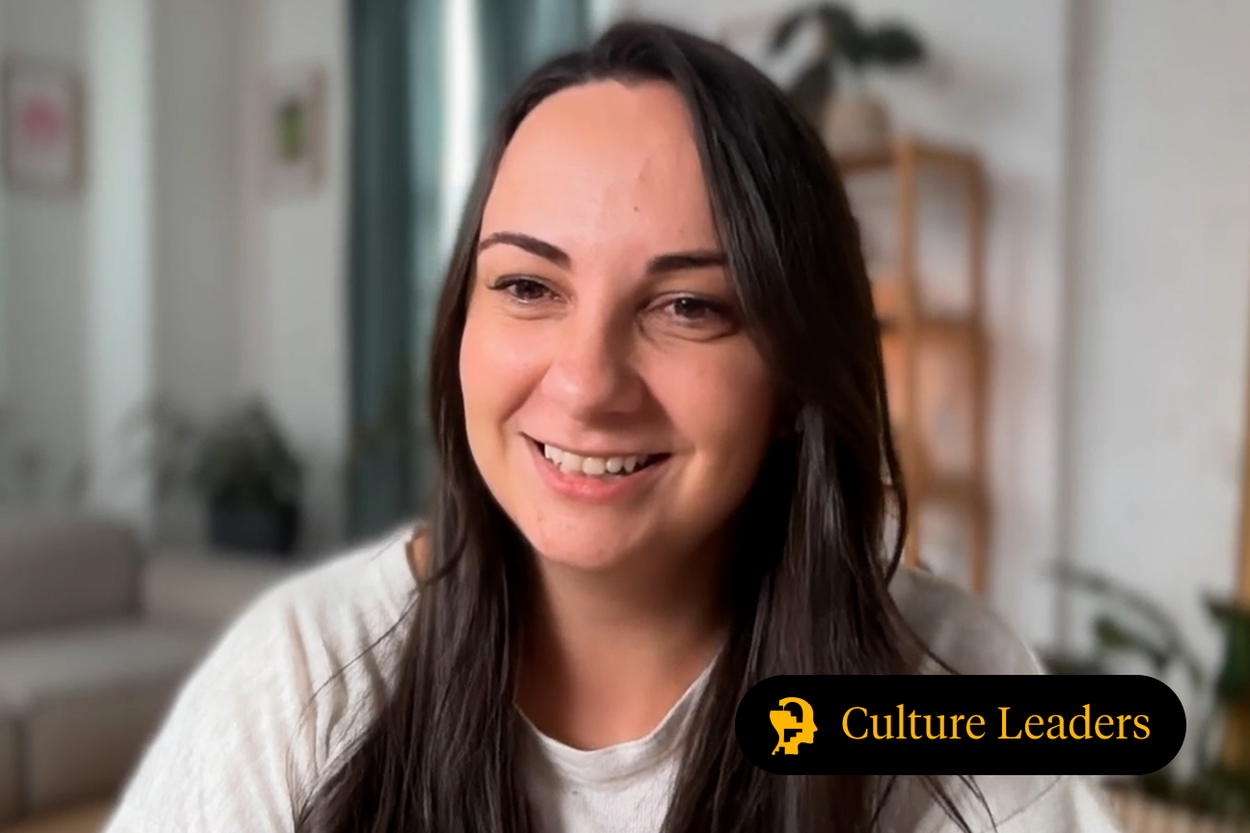
What does it take to maintain the "special things" about a company as it grows from 800 people to 5,500 across eight countries? For Jennie Rogerson, the answer lies in treating kindness as a competitive advantage and being willing to "prioritize loudly." From launching a charitable foundation to pausing every business operation for a full week so the entire team could learn AI together, Canva’s approach to culture is built on intentionality and experimentation.
In this conversation, Jennie pulls back the curtain on the "operator's playbook" that keeps Canva agile. She shares how the company navigates the "chaos to clarity" spectrum, why rituals like birthday desk-singing don't scale (but community lunches do), and the profound responsibility of showing up for employees in their hardest human moments. It’s a masterclass in balancing high-performance excellence with heart.
Show notes:
The non-traditional path: Jennie’s journey from hospitality and Executive Assistant to Chief People Officer in under three years.
AI discovery week: The decision to take 5,500 people "off the tools" for a week to upskill in AI together.
Fewer things well: How "leaving loudly" and "prioritizing loudly" prevent the tech layoff spiral and keep teams focused.
Scaling rituals: Why some traditions (like "Canvaversary" cards) evolve while others are held loosely to maintain their magic.
The "good human" value: Why being a good human isn't about being "nice"—it's about the clarity of honest, hard conversations.
Home and dignity: How Canva supports the ecosystem by open-sourcing resource guides for grief and domestic violence.
Key takeaways:
Culture as a contribution: At Canva, you don't join to experience the culture; you join to be the culture. Every hire is a cultural contributor responsible for fixing problems and empowering others.
Go slow to go fast: Investing a full week into company-wide education (AI Discovery Week) signaled a worldview shift that removed individual "busy work" and built collective confidence.
Manage as a coach: Kindness starts with clear expectations. Moving from "manager" to "coach" means prioritizing feedback and setting people up for success through excellence.
Hold rituals loosely: To scale culture, you must allow rituals to cascade to local teams. Holding a ritual too tightly can cause it to lose its magic as the company grows.
If you've enjoyed this episode, consider checking out more of our podcast. You can follow us on Spotify, Apple podcasts or Youtube.
Justin: Jenny Rogerson didn't come up through HR. She came through hospitality and then executive support, and then built something called leadership operations from scratch and became chief people officer at Canva in under three years. Now that path matters because it shows up in how Canva runs. This is a company that paused every business operation for a full week. That's about 5,500 people across eight countries. All that so everyone could learn AI together. Not just the tech team, but everyone. So that's not just another L&D initiative. That's a worldview.
It's a company where the founders pledged 30% to a foundation before IPO. There are more than 400 employee-led clubs. Dungeons and Dragons, Bad Musicians, and more. Because Canva's founding principle isn't that culture is something you walk into; it's something you contribute to. And it's Jenny's job to make that real at scale. From 800 people to 5,500 across acquisitions in London, Vienna, and Prague, without losing the special things that made it special to begin with.
So this episode is about what it actually takes to run HR like a product team. The experiments that failed, the “fewer things well” mantra that kept them out of the tech layoff spiral, and what it costs in trade-offs and intention to build a company where kindness is treated as a competitive advantage.
G'day there. I'm Justin Angsuwat, Chief People and Customer Engagement Officer at Culture Amp. I'm here with Jenny Rogerson, Chief People Officer at Canva. The company is showing that you can scale a family feeling across 5,500 people in eight countries while having a massive impact in the world of design and beyond.
So, Jenny, I don't think there are many traditional paths into HR. You know, I came from a computer science background, and I know many, many others who came from quite the assortment of places, from finance to marketing to just somehow landing in it. And I know you've got an unconventional path to this role as well. So you started in hospitality, became an executive assistant, built leadership operations from scratch, and became chief people officer in under three years. So I can't wait to dig into that journey.
But I'm going to start with something a little bit different. Let's help our listeners get to know you a little bit better. So we've got this set of conversation cards we've developed with esteemed psychotherapist Esther Perel, where we go a little bit deeper than the “two truths and a lie” type of questions. And so we work closely with Esther and learn so much from her experience and combine it with our own data on human relationships. And we also made them safe for work. So you up for me drawing a couple of cards and seeing where it goes?
Jennie: Absolutely. Let's do it.
Justin: All right. Let's draw a card here. Studio. All right. The card says, “I wish I had asked for help when?”
Jennie: Well, it's a good one. I wish I'd asked for help many times. I think the one example that really comes to mind is when I took on my first leadership position. So moving into the head of people role, it was a role I'd never done. It was an area I hadn't worked in officially. I'd been working with a team, but I wish I had leveraged both people internally and externally on what I could learn—not just from a work perspective but more of a leadership perspective. More of, you know, who are the best leaders that you've ever worked with? How do they show up? What's the important thing to get right, especially in this moment of change, which it was at Canva? And so I wish I had spent just a bit more time thinking a bit more intentionally about how I showed up in that moment in time. I think in retrospect, it wouldn't have been so hard if I had asked for help, even just a tiny bit.
Justin: That's something we all experience, and I'm sure a lot of our listeners have gone through similar experiences or are going through the same themselves. Like, is there any advice you would have given yourself at the start?
Jennie: I think probably “going slow to go fast” would have been my advice to myself. I was so hungry to make an impact and make change and make sure that the teams were feeling really set up, but I didn't take a moment to maybe just take a beat of: Where are we trying to go? What's the overall vision of what we're trying to achieve? And then working slowly through it to make sure that people felt brought along for the journey, but also set up for success in what their roles were in making that happen.
Justin: What a great insight. Well, thanks for sharing a little bit about you. With that, I want to extend that further into your background and your story. We touched on it at the intro, but let's go deeper. You had knockbacks trying to break into tech from a hospitality background. And I know there was an interview or a conversation where you walked away thinking, “I'll never break in.” What specifically did the person say to make you feel that way? And what conversation did you have with yourself afterward? Just walk me through that moment.
Jennie: Oh, we're really digging into the therapy now, Justin. Okay, so it was a conversation—I had been trying to break into tech for a little while. I was working in hospitality, and I then moved into hospitality tech, so I worked in an order-ahead app that was getting off the ground. And then I came to an event at Canva on how to make great presentations. And I've used Canva a little bit as a product, but not really known much about the company.
When I came to the office, I was just blown away. I think the team was incredible. They were so welcoming, friendly... they had gender-neutral bathrooms, which I just loved, there were sanitary products in the bathroom... the whole welcoming experience was just lovely, and I suddenly became really interested in, “Oh, this is somewhere that you can work. This is great.” And so I started to think about what I could do at Canva to help progress what I wanted to be doing, but also what I could work towards that would help achieve the mission of what Canva was trying to do?
I applied for a couple of roles. I actually applied for two roles in the Vibe team, which is now a team that's in the People team at Canva, and I got rejected at the challenge stage, which I was so heartbroken about at the time. I looked at my challenge not long ago that I did for those roles, and I also wouldn't have hired myself. I was incredibly verbose.
I remember having a conversation with someone at my existing workplace who said, “Just move on, someone else will hire you, you're great.” And I just remember thinking like, “No, no. I am set on this company. I'm set on the mission they want to achieve, the goals they want to achieve. I'm set on the culture that they're building. This is the one I really am interested in.” I think they were on the cusp of something really exciting.
And so I got really tenacious. I took the extreme tenacity route of doing all the research I possibly could. I set up a load of notifications to make sure that I knew what jobs were available. And then I saw it was an EA role, an executive assistant role at Canva that came up. I was in operations at the time, and I just thought, “You know what, I'm just going to go for it. I think I can do it. I've never done that before, but I just want in on this company.”
I remember seeing the number—it was like 1,200 people had already applied for this role. And I just thought, “I’ve got no chance in a snowball of that.” So I put together a website on Squarespace, this is what I think I can do, this is who I am, this is what I'm about, these are my skill sets. And then I was about to send it through as my application, and Canva launched their website product. So I remade the whole thing on Canva, and I sent it through. I think I sent it through to Cliff on LinkedIn and just shot my shot.
Justin: I love so much about that story. Can you tell me what happened? So I heard Cliff responded to you shortly after. What did he say? And then what happened next? I heard you walked into a conversation with him, and just curious—what did you walk in thinking was going to happen, and what actually happened?
Jennie: Yeah, so I sent it through the official channels, and then I think I flicked it to him on LinkedIn and just said, “Hey, I'm really interested.” I knew I didn't send it to Mel because I knew that she'd be really busy. And I just thought, you know, I think I could see Cliff had it as his tagline, “You’re great, we’re hiring.” And I just thought, “Great, let’s go for this.” Mel and Cliff were the two co-founders of Canva, for folks that don't know.
So I sent it through, and he sent me a message back pretty immediately to say, “Great, I've taken a look, let's chat tomorrow.” And this was at like 11 p.m. So we had a quick chat, maybe with a recruiter the next day, and then I came in for a challenge about a week later.
The challenge was twofold. The first one was: “We want to do a Canva product onboarding workshop. What would this look like? How do you think we could run this?” And the second was: “Mel and Cliff are hypothetically going to San Francisco in four weeks. How would you go about planning their trip?”
And so I just went deep into the research. For the product onboarding, I signed up to loads of other companies and what their onboarding was, and I created these tailored packs of: “If you want to do a one-hour workshop, this is what it could look like. If you want to do a four-hour workshop, this is what it could look like.” I’d been a teacher, so I just kind of got my real teaching gig out to play on how to make it really engaging.
And then I did a lot of research on what Mel and Cliff were working on at that time for their hypothetical trip to San Francisco. I think Mary Meeker had just come on board as an investor, and I knew that she was in San Francisco, so I wrote out this proposal of: “This is what the meetings with Mary could look like; these are the topics that I would suggest.” And I also had known that Mel and Cliff had an anxious dog. And so I was researching like, “Oh, we could get a dog sitter,” and all of these things—high to low of all of these things that I thought would be helpful.
I presented it to Cliff. He was so engaged and enamored. And then he was like, “Just stay there. I'm just going to go and get Mel.” Ran off to get Mel. So I'm just sitting in this meeting room being like, “Oh my God, this is so nerve-wracking.” So Mel comes in. I do this rapid-fire presentation to her. Cliff’s like, “Yeah, just go through it really quickly.” So I'm rapid-firing it. She's like, “Just take a minute. Yeah, let's go a bit slower.”
And then she starts asking these gorgeous questions that really gave me insight into what she was about. One of the questions that she asked that really sticks with me is, “On a spectrum of chaos to clarity—chaos being zero and clarity being 100—where are you most comfortable?”
And I said, “I love the 25 to 100. I'm not your idea kind of person, but if you have an idea and a formation, I will take that and run with it and build operations around there.” And it turned out that worked fairly well because she's really a zero-to-25 kind of person; she loves that kind of ideas phase.
And so I thought it went okay, kind of didn't really know what to expect. And then I was walking down the hill from our office in Surry Hills in Sydney down to Central, and by the time that I'd got to the train station, I had an email to say, “We'll get you an offer this afternoon.” Which was incredibly exciting.
I think I walked in expecting, you know, a polite chat, very formal—these are the founders and CEO and COO of a company. And I got a lot of curveball questions, a lot of fast-paced critical thinking. And so it was far less about, “Convince me why you can do this based on your experience,” because we all knew that I didn't have experience in that domain, and it was more, “Convince me that you can figure this out.” And so the interview, both ways, worked quite well on them, interviewing me and me interviewing the company.
Justin: I mean, it's such a standout there in terms of the amount of research you did, even to submit your applications before, and researching kind of the depth of what they might be doing in San Francisco. But early on, you know, you worked with Cliff to create leadership operations. I think that was one of your early roles in there, Canva, and there wasn't a blueprint. Like, you did have to work all of that out. And so I'm curious, like, so what was the first real problem that you really tried to solve like that? How did you figure out the solution when there wasn't anyone to ask?
Jennie: Goodness, yeah. So, for context, I started as an executive assistant and within my first few weeks, I’d been doing a lot of work around the leadership team and working with them on projects—kind of between the founders and the leadership team on what they were trying to achieve. And Cliff and I went for a coffee, and he said, “I think there's a formal role kind of in here somewhere.” And so, what if we put your role more around kind of the operations around leadership and how we get work done and the goals we can achieve?
It was kind of a pseudo-Chief of Staff role, but it looked very different at Canva at the time; we were much smaller. I don't think there was ever one project that I worked on; there were always kind of these plates spinning across the leadership team. So I worked on things like: Mel and Cliff wanted to launch a charitable foundation, what would that look like? What was our first diversity and inclusion strategy? What did operations partnering look like? We went for a moment there without a customer support lead, so hiring that... doing research into what that could look like, leveraging the networks across the talent industry that I had.
And so it was really just about seeing opportunities, putting my hand up, working with the leads on what was most important for them, and helping them to achieve their goals if I could add any kind of skill set along the way. I think there's no real silver bullet for the solution, but I think one of the main things that I really leveraged at that time was relationships. I made a real effort to get to know anyone and everyone that I could across Canva. We were much smaller then—I think we were around 500 people—so it was a little bit easier than it is now at 5,500. I really made sure that if there was an answer to be found, I could know who to go to and who to ask for what.
Justin: Yeah. And that's so powerful at a company like Canva where you have an incredible community and great humans around you. And that is such an important part of your culture because if everyone's trying to work things out for the first time themselves and they're relying a lot on the people around them, let's make sure they're great people.
And I'm really curious how that plays out. You know, was there ever a candidate who interviewed amazingly, had all the technical skills—the perfect technical skills in inverted commas—came really highly recommended, but they failed that kind of empathy screen? And did anyone fight to hire them anyway, because it's really easy to kind of go past that, look beyond that empathy piece early on? “God, they exactly fit the role I need. Let's just go hire them; we'll work the rest out later.”
Jennie: It’s such an interesting point because I think to be a good human looks very different to everyone. And I think what is really important is when people talk about being a good human in their interview processes, it's not one question that you ask, right? There's no silver bullet for understanding what makes a person innately good—and what does “good” even mean?
And so I think Canva takes hiring incredibly seriously, as we should. Every person is your culture. And so taking hiring seriously belongs to everyone. I think everyone in our interview processes—from TA to the hiring managers to the final sign-off—takes that as a really key responsibility of theirs. And so I think there's a shared understanding in how we educate the teams on hiring: it's not just what you do, but it's how you do it, too.
And then I think you screen at every process. During your challenge stage, for example, one of my favorite things to do in interviews is the challenge interview that I was talking about earlier—making sure their challenge is really emblematic of what people will genuinely be working on when they get inside of Canva. And then having a back and forth on that. So, really testing the candidate on, you know, when they present something to you, give them feedback on it. “Okay, well, what if this changed?” or “What if that person wasn't here?” or “AI changed the game and this came in now, what would you do?”
And really pressure-testing their collaboration and how they respond to that kind of working environment that we know will be true in Canva. I think making sure that your processes and how you show up is very inclusive, making sure that people feel like they belong and that you are rooting for them, can really help set them up for success.
Justin: It's such a thoughtful approach. Something that really stands out in these conversations is how you emphasize how important empathy and kindness are as part of the culture. But you've also had to make hard business decisions. And so I'm curious how you found that balance, like delivering news that some people might feel is unkind news—like maybe a role elimination or someone didn't get a promotion or there's a strategy change that impacts someone. How do you reconcile that with “just being a good human”?
Jennie: Being a good human is a really key value of ours, but it's one of six, right? There are five others that are incredibly important. “Setting crazy goals and making them happen” and “pursuing excellence” are also two incredibly important values. I think when our values work really well, it's when they work together.
And so I don't think that being a good human means to be nice or not to tell the truth. I think when there's conflict, being a good human means having the harder conversations. And it's something that only comes with practice, right? It's something that none of us get right early on. I'm sure this is something that we all stumble with early in our careers, but it's something that I think leaning into is incredibly important.
Justin: And it's so central to who you are. I'm curious how you've been able to scale that value because you've seen companies, I've seen companies with similar values, and as it starts to scale, it can be... not weaponized, but you could imagine someone giving difficult but important constructive feedback, and someone's like, “Well, you're just not being a good human.” And as you've got 5,500 people around the world, how do you still keep that value alive? How do you scale it?
Jennie: I don't think there's one answer to that. What does that look like, to be a good human? It starts with things like setting really clear expectations. As a “coach”—at Canva, we call managers “coaches”—the beginning of being a good human is your manager giving you feedback, but giving you clear expectations. But actually, your manager asking you for feedback is also really helpful. How do we make sure that we are setting people up for success, helping them pursue excellence—one of the other values—and all of that being the infrastructure around being a good human?
Justin: Yeah. And one thing that really strikes me in there is you talking about some of the behaviors. And so I imagine that's part of the unlock—being able to define some of the behaviors of what it means to be a good human as a manager? It's an important lesson. And so it's one that I'm certainly taking away.
As you've grown—like you've had incredibly fast growth, like hyper-growth—one piece was scaling your values, and the other piece is about scaling the work because I imagine there's a lot of work going on inside Canva as you continue to build for millions and millions of people. And one thing that you talk about is “doing fewer things well.” You know what I mean? Saying no to things the business wanted. And I imagine that's generally a hard thing for a business to do. And so do you remember any times in Canva's scaling history where it was particularly hard to deliver that “no”? Do you remember any trade-offs where you're really wrestling with, “I think we should do it, but we're going to say no to this thing”?
Jennie: Every day. Every day. I think when you're moving fast—and technology is a fast-moving industry, and there are always new things to be done—and with a product like Canva, there are so many products within the product, right? You have the presentation product, the video product, what it looks like on mobile... all these competing priorities.
Prioritization is consistent. I think it would be remiss to think that we have done this well. I think we are all on this journey. But making those hard calls can be a really tough moment. I think what matters most to us is making sure that the leadership team is really aligned in what those key priorities are and then helping to bring that to life in a really meaningful way, but over-communicating that as much as we can.
Justin: Yeah. That's powerful. Are there other tactics that you've learned throughout this? I'm sure there are times in which you've tried, and there are times that you kind of look back and you're like, “Oh, that worked really well,” in terms of making that de-prioritization decision or saying no to that thing. Are there other tactics that you have found to work surprisingly well for you?
Jennie: Something that I've tried to do in the People team is, you know, there's this concept of “leave loudly” when you're going on leave to make sure that people know it's safe to take leave? I think that's what I've tried to do for my people leads and the wider people team: making sure that when something is de-prioritized, we are really clear about it. Saying, “This was a priority last year, but the ground has shifted beneath us, and this is no longer a priority because X, Y, and Z.”
Being clear about why you're making certain decisions can help people understand that the work they've put into things is still very valued and valuable, but we're now moving in a different direction.
Justin: I love that. It’s “leave loudly,” not like, “let's de-prioritize something quietly.” It’s “prioritize leave loudly.” I love it. It's... be proud about it. You're not ghosting on it; you are loudly saying no to it, and it sets a precedent, and that requires a lot of discipline.
You’ve scaled to a very large team of 5,500. Are there any other small company rituals or traditions that you had when you were small, and then when you tried to scale it, it completely lost its magic?
Jennie: So many. So many. One of the ones that I always think of is when Canva was very, very small—if it was your birthday, you would stand on a desk, and everyone in the team would stand around you and rotate around you singing “Happy Birthday.” And it was... I have had it done to me once, when I foolishly came in on my birthday, and it was a horrifying experience.
It also got quite dangerous, like, cramming everyone into a room and shuffling around people. We very thankfully no longer do that. Although when it's not you on the table, it is quite fun and funny. But that one certainly didn't scale.
Others, we kept a lot of the sentiment behind. Things like: we've always leaned into having a communal table—our lunches at Canva are all on big long tables because we want people to sit not just with their one team but overlap.
And things like “Canvaversary” cards. It used to be that when you hit your one, two, or three years at Canva, you'd get a bit of paper with everyone who'd signed a note. Then COVID happened, and we made it a Canva design where you can share that globally, and then people can add photographs, GIFs, or messages. So keeping those kinds of cultural moments organic but not static.
I think when you hold on to your cultural moments like that too hard... It's kind of that analogy when you hold a butterfly too tightly in your hands—it starts to lose all its magic. You kind of have to hold it very loosely.
Something we did at the People team last year that I really loved was making sure that you have “magical moments.” For example, we had a “Festival of People” which brought together our whole People team. Someone in the Vibe team created a little caricature of everyone in the People team—just this wall of caricatures—and then they'd given everyone little stickers that said “Jenny Thinks,” and you wrote a note on what you thought about that person and stuck it on the paper.
At the end of the week, everyone got to take their paper home. It was just that moment of rituals, not having to be company-wide or really serious. They can just be these moments that you give your team time and space to think about.
Justin: How cool is that? There's nothing like hearing peer feedback. And I bet there are a lot of people who walk away from that experience going, “Wow, you deal with the day-to-day ups and downs of work, but you don't realize the impact that you're having on all of those around you.” So to be able to walk home with a caricature of yourself and all the feedback from your peers, I imagine, is something that is worth more than a lot of money for a lot of folks.
So, we touched on AI Discovery Week earlier, right at the intro, but now I want to get back more into it. After AI Discovery Week ended, what changed? Like what actually changed in how teams work? And do you have any examples of that—of how a team or workflows meaningfully changed since that week?
Jennie: So, something that I take incredibly seriously at Canva is the “People Pulse” feedback. The big feedback that was coming back around AI was that people just didn't have time to learn. They were trying to achieve their goals and also learn this whole new thing that AI was becoming.
And so we created AI Discovery Week, which was three days of learning—internal and external speakers on different topics—and then we had a two-day hackathon at the end. We wanted it to be a signal of how seriously we were taking this for our team. We really wanted to invest in their upskilling and do that in a really meaningful way—to share that AI wasn't a “Tech Team” or “IT Team” initiative; it was the responsibility of everyone in the team.
The biggest change I saw was the confidence around AI. We answered a lot of those questions upfront, but also made sure that people felt confident in their own abilities. A really good example of that change was we have a benefit at Canva called “Vibe and Thrive,” which is an annual allowance for you to use on whatever you would like to either vibe or thrive—rollerblading club, home office setup, etc.
It used to take the team a lot of back-and-forth in email form to answer loads of questions: “Can I buy this? Is this included?” And so we built some AI tooling around this to reduce the busy work. We built AI to answer yes-no questions: “Can I expense rollerblades?” At first, it was a yes/no based on what we’d seen before. Then the team worked on deploying agents to actually make judgment calls: “I have seen that rollerblades got approved; therefore, this tangential thing should probably be approved.”
It took two people two days to build this, test this, and implement it. And in five months, that has answered 12,000 queries. That's taken an enormous amount of busy work off a team that we can now put on something else.
Justin: An impactful week. For many organizations that are thinking about going through this, what's one piece of advice you would give them from what you've learned from having this experience?
Jennie: “Going slow to go fast” can make you go much, much faster. It was a big investment—a week “off the tools” is a long time in a tech company—but taking that time out to show our team how serious we were about their own education was important. Leverage the resources that are free out there, but also leverage your team. We leveraged people internally who had really leaned into this space to teach others.
Justin: Very cool. And as we zoom out... I mean, it's very clear that Canva is investing a lot in its culture, and it's not just for purely how to squeeze every single second out of someone. There is an element of kindness or even an investment from an AI standpoint. What would you say is the best compliment you've ever overheard someone talk about Canva as a workplace?
Jennie: I think when people feel like they truly belong at Canva, that is the best compliment. And I'll go a little bit macabre here, but I think it's important—at the hardest moments in people's lives, that's much more impactful and much more important.
In two recent examples, we had a death in the team recently. You and I, Justin, were meant to go to an event, and I actually ended up canceling because I needed to really support a team in how we broke the news and made sure they were supported. We were talking about it in open forums—we had our go-to-market off-site that day, and I talked about it on a panel because people in that room were experiencing grief in real-time. Hearing back from our team on why it mattered that we were so openly talking about it was incredibly important.
The other example is the work the People team has done to support people who might be experiencing family and domestic violence. We have spent a lot of time intentionally putting work behind: “What do we do to support people who might be going through it?” I always remember this really meaningful moment where someone said to me, “Canva became kind of my home and my place of dignity where I didn't have that elsewhere.”
And so those kinds of compliments always mean the most. How you show up for people in their hardest moments is often what people will remember. They don't remember what you do, but they certainly remember how they felt.
Justin: Wow. Wow. Thank you for being so open and transparent. It would have been really easy to take that question and answer with a plethora of perks and benefits. The fact that you go through some of the toughest moments shows so much about that company.
Jennie: No, thank you. And I think it's also really important how we support the ecosystem. At Canva, we've open-sourced our resource guides—our family and domestic violence support guide and our grief and loss guide—so that if you are in a smaller company and don't know how to react to these moments, you can leverage them at any time. Duplicate them, make them your own. Please do leverage them because those moments do really matter.
Justin: It is such a big part of your culture around that kindness and wanting to do good in the world. So if someone were to join Canva tomorrow, what's the one thing you'd want them to understand about what makes Canva different?
Jennie: I think it might be a bit obvious, but we take our culture really seriously. The one thing I would love for people to understand is that you don't join Canva to experience the culture; you join Canva to be the culture.
And when you look across our values—like “pursue excellence”—we all have to be our best. If you're at a company that's growing 50% year-on-year, you have to be really serious that you need to be growing 50% year-on-year. That's a hard thing to sign up for. But also, look at “make complex things simple.” You should feel very empowered to help solve our hardest problems. We have company-wide resources like our “Fix-It Form” where anyone can share any problem that they're having. We would love to maintain that small-company feeling, and everyone plays a really big role in that.
Our mission is really serious, but having fun while we do it is really important—celebrating each other, having celebrations for Lunar New Year or Ramadan, and having a big laugh along the way, I think, is incredibly important.
Justin: Well, I can tell just from this conversation that it's been so fun hearing from a company that scaled so quickly and has a culture built around kindness. So Jenny, thank you for being so transparent about what goes on inside Canva and your own journey.
To our listeners, thanks for tuning in. I hope this gives you some inspiration for how you can have both business success and heart and kindness all in one. Until next time, I'm Justin Angsuwat. Keep it real and keep it human.
Podcast
Podcast
Podcast