Podcast
Radical roots, scalable future: balancing purpose and performance at Patagonia
Employee experience
38 listen
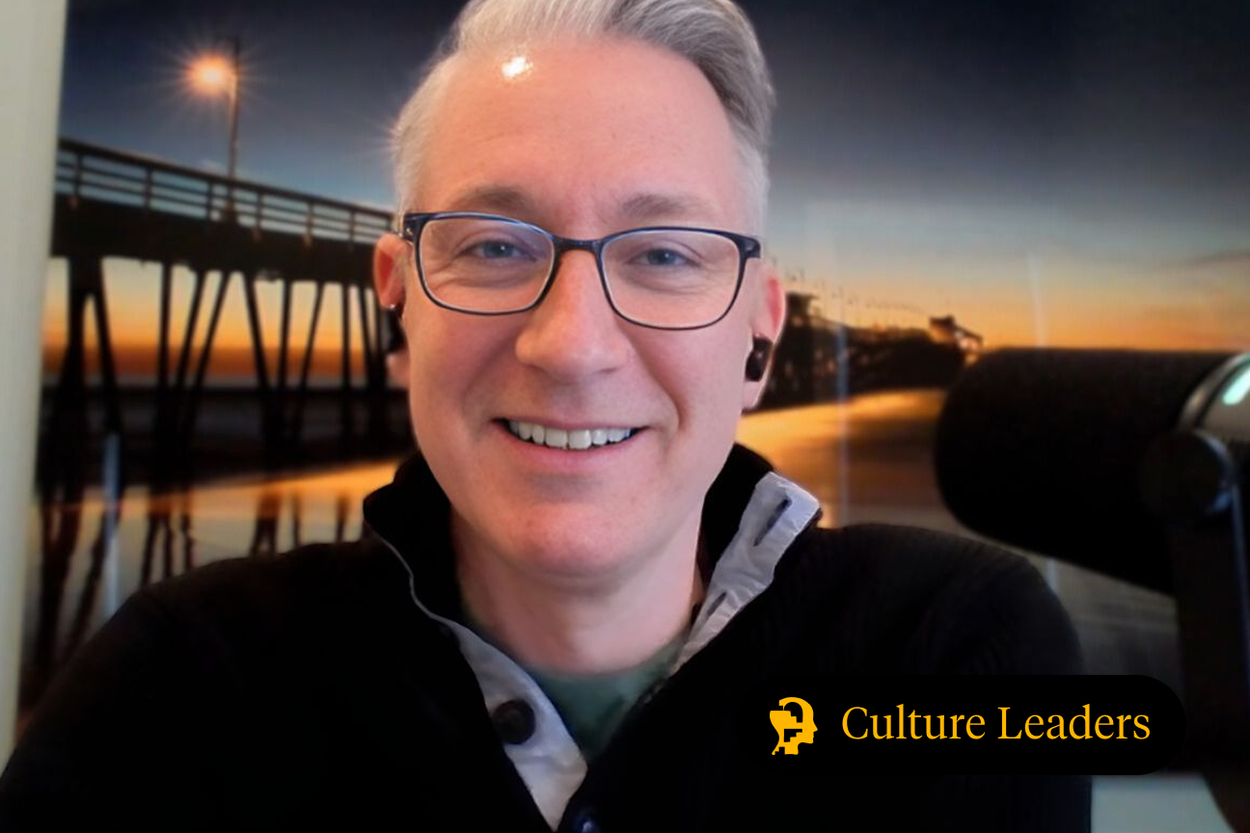
Richard Taylor's path to SVP of People Experience at Nasdaq is anything but conventional. After years of studying Sanskrit and Buddhist philosophy, he stumbled into HR – not even knowing what the letters stood for on day one. Now he's the person behind Nasdaq's transformation: ditching "talent management" for "people experience," using Culture Amp's data science to predict attrition before it happens, and equipping 2,000 managers with direct access to their own team sentiment scores.
In this conversation, Richard gets candid about growing up without a map – applying to just two colleges because that's all he could afford – and how those experiences shape the way he leads today. From a bureaucracy-busting campaign that cut hiring approvals from 8 sign-offs to 2, to a grassroots postcard recognition tradition born in Manila that spread globally, this episode is a masterclass in building culture that's human first, even in one of the world's most regulated industries.
Show notes:
From philosophy to people: Richard left a near-complete PhD in Buddhist studies to stumble into HR, not even knowing what the letters stood for on his first day.
Language shapes culture: Nasdaq replaced "talent management" with "people experience" and measures culture as part of executive bonuses.
Data science meets people science. Richard uses Culture Amp's factor and regression analyses to predict attrition risk and gives all 2,000 managers direct access to their own team sentiment scores.
The L&D unlock: Centralizing the learning and development budget and building a cohesive internal curriculum moved engagement scores up double digits.
Bureaucracy busting: A deliberate campaign cut hiring approval sign-offs from 8 people to 2, helping Nasdaq compete with the other top businesses on speed.
Empathy as a retention strategy: Flex days, four weeks of work from anywhere, and a CEO who leads with gratitude in every town hall have driven Nasdaq's turnover to 3x lower than the industry average.
Key takeaways:
Think lattice, not ladder: Sideways and diagonal career moves build stronger skills and open unexpected doors.
Data predicts attrition before it's too late. Anonymized team-level sentiment data lets Nasdaq act before people decide to leave.
Centralize L&D to make it coherent. Fragmented, manager-by-manager training doesn't build culture. A shared curriculum does.
Don't copy-paste the past. Question inherited practices, from one-word values no one understands to 8-person approval chains.
Empathy is a competitive advantage. Nasdaq's culture of genuine care is directly linked to retention outcomes that outperform the industry by 3x.
If you've enjoyed this episode, consider checking out more of our podcast. You can follow us on Spotify, Apple podcasts or Youtube.
Justin Angsuwat: [00:00:00] Most financial companies say they care about people. Nasdaq's taken this a step further, and they've put their money where their mouth is because they put a measure around culture into executive bonuses. This is a company that ditched talent management because it sounded too transactional, where the SVP of people experience begins meetings by asking teams to share one personal win and one professional win, because you can't build trust without vulnerability.
They measure employee satisfaction like other business metrics because their people are the business, and somehow they've done this while running the infrastructure that powers so many economies around the world without missing a beat. Richard Taylor, SVP of people experience, is the person behind so much of this.
How do you humanize work in a company where precision isn't optional? How do you scale [00:01:00] intimacy across operations in sixty offices globally? How do you bring Buddhist philosophy to capitalism? This episode isn't about what Nasdaq's website says. It's about what actually happens when you try to bring a philosophy degree and Buddha studies to Wall Street, the data that drives decisions, the uncomfortable trade-offs, and what it costs to run HR like a business while treating employees like humans.
So g'day there. I'm Justin Angsuwat, the Chief People and Customer Experience Officer at Culture Amp, and I'm here with Richard Taylor, Senior Vice President of People Experience at Nasdaq, the company proving that even highly regulated financial institutions can build cultures of empathy, belonging, and radical transparency.
And so now, Richard, I know you've got a background in philosophy and religion, but before we dig into all of that, I want to start with something a little bit different. And we've got this set of conversation cards here that we [00:02:00] developed with, uh, famous psychotherapist Esther Perel, and they're conversation starters designed to go deeper than your usual kind of get to know you questions.
So I want to put you on the spot, you know. Should I draw out a couple of cards and see where it takes us?
Richard Taylor: Sure.
Justin Angsuwat: Great. Uh, all right, I'll just draw the top three
What I have here is, um, take your pick. We've got, "I secretly taught myself how to..." Um, "I don't want to brag, but I'm pretty good at..." Or, "The thing I always get to last on my to-do list." Any of those speak to you?
Richard Taylor: Those are good ones. I secretly taught myself to play piano. We're not talking about, like, concert hall level pianist.
But, um, I grew up poor, and my family really couldn't afford piano lessons, but they did find, like, a used piano, like one of those old school uprights, and I played with it, and I learned chords, and I learned basic stuff and got me some [00:03:00] sheet music and learned the basics. It was actually a lot of fun, but, um, just a hobby.
Justin Angsuwat: How did you learn it on your own?
Richard Taylor: I mean, j- step by step, right? I, I didn't start out playing Chopin or anything. But you start out playing small pieces. For me, it was just, it was just a hobby. Like, people teach themselves math or astronomy or something, you know?
Justin Angsuwat: I love that. Um, I now know that, uh, there's gonna be a request, I imagine, at Nasdaq for, uh, some of your-- some of-- a, a demonstration, if you will.
So I'm looking forward to hearing about that. Um, and so let's dive more into your background. But, um, as I look at this, even just the last thing I always get to do on my to-do list is one that stood out to me as well. And today, um, as we are as humans, um, I forgot to bring a blazer to wear for this. Uh, and so I'll be T-shirt only.
So it's a, it's a great reminder that we are, we are all human and, uh, even the host sometimes forgets to, to bring half of their, uh, their wardrobe. But let's get dug, dug-- stuck into it and talk about you. And [00:04:00] so I mentioned before that you'd studied Sanskrit. Um, you can read ancient Buddhist texts in their original language.
And, and I heard that you spent time in a monastery in India. So if we start from the start, you know, how does someone who spends years studying the nature of suffering and enlightenment, um, end up in HR? You know, what's that through line that connects those worlds for you?
Richard Taylor: Uh, there is a through line which has taken me years to kind of see for myself, but it really was accidental.
I was well into my PhD program. Keep in mind, this is four years of undergrad degree, three years of master's degree, which I did complete, and then a seven-year PhD. And I got through the first six years, did my exams, passed my languages, was halfway through the dissertation, and I just kind of lost the will to live.
You've heard probably many PhD students say you just hit a wall where you're like, "Why am I doing this?" And it was a critical comment, not toward me, but from one of [00:05:00] my professors, who shall remain nameless, when asked, you know, "What does this mean? Why are we here?" And I shared how much I really loved the teaching part of academia.
He said, "Yeah, that's nice, but really the students are meal tickets. I mean, they pay tuition, and that keeps the university running, but we're really here to do important research." And I thought to myself, "Huh, the research I'm doing, like- Some deep esoteric Tibetan thing in history, maybe three people will read my paper on that topic, and their job is to rip it apart and, you know, be critical and analyze it.
I just thought, "This is not the fulfilling life I had imagined getting into this field." And what I really loved was the teaching, and I would have different students, different classes. And I got to watch these young adult minds open up and become critical and great writers and really, really smart people who just picked up these great academic skills.
That was fulfilling to me. Watching young human beings develop into older human beings, that was really fulfilling. And this is 30 years [00:06:00] ago now. I'm still in touch with some of my old students who have gone on to get married and get medical degrees and have really interesting lives. That was, that was life-giving for me.
And I thought, "I should find a way to do that for a living, not write papers about some Tibetan history in 1620," you know? Like Doesn't really light my fire. And I'm not throwing shade. There are some people for whom that's awesome. For me, it was the human development part, not the I'm in a dusty library for 12 hours a day.
Justin Angsuwat: I love that learning. The, the, the initial thought of, um, kind of diving into the topic, but then actually learning that it's that human interaction and the, the, the kind of that human enlightenment, if you will, um, that really powered you. Uh, it must have been a powerful learning. And so Richard, I know you just shared in, um, in the first set of cards that we talked about around learning, um, the piano, you know, you-- that you, you mentioned that you grew up poor.
Um, and I'd heard that, you know, none of, none of your family went to college and, um, you could only afford the application fee to apply to two schools. Um, so could you tell me more about that? And tell me [00:07:00] about the moment when you realized that you might not have had the same kind of map, for lack of a better term, that, you know, other kids seem to have.
Like, what did that feel like? What was, what was that whole experience like?
Richard Taylor: Yeah, I mean, I think many people grow up without a lot at home, and when you're young, you don't really notice it. You're in a neighborhood with lots of kids in a similar circumstance, and you don't think about it. It was high school I began to notice, like, you know, financial differences and affluence versus not being affluent.
But when I got to my college... By the way, I applied to two schools, as you said. I got in-- I got accepted into one, so that's where I went. Um, I got to campus, and I began to meet, you know, the freshman students, the first-year students, and some of them had, like, really nice cars and things. Like, they, they drove their BMW and their Audi and their Mercedes to, to campus.
I didn't have a car. I didn't have a driver's license. And I thought, "Wow, there are some kids that are just really well off, and they do four spectacular family vacations a year to the Amazon rainforest, and they go skiing and, you know, the-these wonderful places." And [00:08:00] I didn't even know half what they were talking about.
I had to look up on a map, like, where is the Amazon? So, um, you realize there's disparities. But I did find the university I went to really equalizing in a way. Not so much that I wanted to compete, but we were all able to apply ourselves to learning. And your family background is nice, but it doesn't really affect how you are able to learn and grow.
And so I did well in school, and that was, that was a really important thing in my life, that I was able to get a good education, mostly through scholarships and through part-time student work, and get my career started that way, which I wouldn't have learned from my parents, although they were great parents, right?
My dad wasn't a corporate lawyer. My mom wasn't a doctor. I had to make my own way.
Justin Angsuwat: There's two incredible themes that come up from just some of these stories. One is it sounds like you, um, just had your eyes opened to this whole new world that you didn't even know existed as you kind of stepped- Yeah
into, to, to university. Um, and, and second of all, um, [00:09:00] that-- and now you're the person kind of creating this map as well, 'cause you, you didn't have a map walking into there, and you're kind of responsible in some ways of creating the map for thousands of employees at Nasdaq. And, um, I'm curious, have you ever come across anyone at Nasdaq that's kind of reminded you of, of yourself?
Richard Taylor: Yeah, there's been quite a few people, not always of humble backgrounds. But I think-- I, I get exposed to the internship program. I, my team and another team has a lot to do with our, our annual interns. And anybody coming in, you know, whether they're first year, second year, third year, they're usually college students, and many of them didn't grow up in a corporate family household, and they don't know what's up.
And I, I tell this particular story quite often with them to reassure them, like, "I get you." I say, like, "Listen, my first job," by the way, it was not in HR. That's a key fact. It was a job in training, but in, like, a, a different part of the company. And my first day on the job, my pretty awesome boss and I did my paperwork, and he's like, "Great.
You're all set. Take this upstairs to HR, and I'll see you tomorrow." [00:10:00] And I stood there looking at him 'cause I didn't know what the letters H and R stood for, right?And now I'm like, you know, SVP in human resources. But I tell this to the interns, like, it's... there is no dumb question. Like you, I didn't know what accounts payable was.
I didn't know corporate marketing. I didn't know any of this stuff, so it's-- this is the time. You're an intern. This is your time to learn and, and meet a lot of people and ask questions. And like you, I came from, you know, not knowing a lot, and you can have a very successful career if you pay attention and make friends.
And they-- I think I connect with them on that level because we all began somewhere and didn't know a lot in the beginning, you know?
Justin Angsuwat: And does that change your perspective on kind of career maps in general? Like-
Richard Taylor: My perspective is that people can get off on the wrong foot thinking, "I have to do this one thing and go up, up, up, up, up."
Pigeonholing yourself really early could be a mistake. It's easier to move around in your early career. You know, you can be a entry-level person in lots of things. So I encourage people to think broadly, and I think this is commonplace in HR now, but think of your career as more of a lattice [00:11:00] than a ladder.
Lattice has many directions, sideways and diagonal. A ladder kind of makes you think you should go up, and if you aren't getting promoted regularly, like every year, there's something wrong. And I'm like, "That's probably not realistic and also kind of boring." And by moving around and learning what different teams do, first of all, you'll meet a lot of interesting people, but it may open up doors for you.
Justin Angsuwat: There's such gold in there around lattice over ladder. And so with all of that, what's been really interesting is you've kind of also moved, uh, from what I understand, like, pretty intentionally away from a concept of talent management and more to people- Yes ... experience. And, you know, the language is quite powerful, and so that language shift must have come from somewhere.
Can you explore that a little bit?
Richard Taylor: I, I think it does make a huge difference, Justin. Now, I'll give Nasdaq credit. I was hired into a role that my boss created called employee experience. But even before I joined my current company at Nasdaq, I've been on this path for a while, and I really feel the words talent management has a very corporate, hierarchical, top-down [00:12:00] feeling.
You all are the talent- ... and I'm here to manage you for the company's benefit. And I think what most adults really want is to do things with them and for them and in service to them. And so the employee experience is really a- an employee-based lens around, like, you have a choice of where to work. We want you to work at our awesome company.
Let me tell you what makes it awesome. But also let me listen. What would make it more awesome? You know, we think we're doing all these great things. I can sit in a conference room and think great things all day, and my customers, who are the employees, say, "Yeah, those great things, Rich, they weren't so great.
We'd really rather have X." And I have examples of this where I listened and I was like, "Oh, what our, what our people really want is not what I first imagined," and that's okay, and even it's often cost neutral. Like, just switch gears. I, I say this a lot. Give the customers what they want. This is a business, right?
My business is people, and my customers are my employees, and they often give me feedback on their customer service they're receiving from my team, and I'm thinking, "This is valuable, [00:13:00] right?" Yeah, let me help people be successful and not shove at them what I think they ought to want.
Justin Angsuwat: Um, it's a great example.
Uh, are there any pieces of feedback that you've had during your time at Nasdaq where you've kind of stepped back and you're like, "You know what? You're right. Like, I, I never thought about it in that way before"?
Richard Taylor: Oh, yeah. I'll give you a recent example, I mean, recent the last few years. Yeah. We put in place something we didn't have before, a, a recognition program that was peer-to-peer, meaning people could nominate each other for being a great team player, even across teams.
They could be completely across the company, but they're partnering on a project, or they're working on a customer thing, and someone shows up really well, they're helpful, or they go the extra mile even though it's not their job. They're here to support the team. You can nominate anybody in the company for different levels of awards.
And we made it initially that you could, you know, have a small selection of things, and what people really said was, "We want company swag." Nasdaq feels poor for company swag. We don't hand out a lot of Nasdaq hats and T-shirts and mugs and... In Europe, they're really into the socks. I don't understand it as an [00:14:00] American, but they want the Nasdaq socks.
And I'm like, "You know what? These are the customers. They want socks." And so our vendor couldn't actually provide the Nasdaq swag. So we recently made a change, and this year we're rolling out a new vendor that does recognition with points you can exchange for things, including swag, all in one. And so people can get their $100 gift card, and they can use it for a Visa gift card or a, a piece of luggage or Nasdaq T-shirts and hoodies.
And so we gave the customers what they want. It wasn't easy to find a vendor that would do this, but we realized how important this would be for our people and that the recognition is meant to be meaningful. It's not what I think you ought to want for recognition. They told me what they want of recognition, and I thought, "I need to go figure out a way to do that."
Justin Angsuwat: That's so powerful. I mean, I see that in many organizations where it's sometimes the things that you least expect that becomes the most powerful kind of form of recognition, and socks is a great example. It's one that just sticks to my mind now. That's, that's incredibly powerful to, to go listen to your people, and I know you collect a lot of data.
I mean, it's, like, in Nasdaq's [00:15:00] kind of, uh, DNA, if you will, and I know you've moved to what you call people science. And so I'd heard that you use pretty cool things like factor and regression analyses to understand employee sentiment, predict attrition risks, like, going even beyond, um, kind of asking customers exactly what they want.
And so I think that that's pretty cool and, um, really interesting. It's pretty powerful in a lot of ways, like, it... but it can also be a bit like, you know, Minority Report for, for HR, you know, if we could get Tom Cruise to be in an HR movie. Um, but could you share a little bit on the inside of how it actually works?
Richard Taylor: I will do, and I will share a very direct shout-out for Culture Amp, because early, early in my career, we tried to do different kinds of surveys, generic surveys, and we'd export it into Excel sheets and try to manipulate the data. It was kinda wild. The product that we use now from Culture Amp allows us to ask what I would call outcome questions.
Outcomes like, "Are you proud to work here? Do you see yourself here in two years?" Which are things that I don't think I can directly control, like make [00:16:00] Justin want to be here in two years, right? I can do other things that add up to Justin saying, "This is a really good home for me, and I like this professional experience for myself."
So we have these outcome questions that we call engagement. You guys know 'cause you do this. But there's, like, for our company, 30 different factors below that around career advancement, recognition, I have a good manager, my manager makes time to meet with me, da, da, da, da, da, da, da. Leadership, all the things that we care about.
But I can also slice and dice the data and say, "Show me only our professional team in Stockholm. Show me only the men in Stockholm. Show me only the women in Stockholm. Show me who's been here with 10 or more years of tenure. Show me the new hires." And you can see patterns, and one of the most important ones was intent to stay.
We, we keep the survey anonymous in that I don't know that Johnny or Janie said, "I don't plan to be here." But we can go down to groups as small as four or five and say, "This particular team under this manager or in this geography or at this tenure level or age level, [00:17:00] they're unhappy." When people believe it's truly anonymous, they tell you the truth about their manager, good or bad, and whether they see themselves here in a few years.
So it's allowed us to predict the future, but also take action. When someone's resigned, it's really hard to get them back. Before somebody resigns, you say, "Oh, I know what's frustrating them, and I can probably help them work through it And then employees come to trust when they see you doing that, they say, "Wow, this company really cares about my voice.
They're really listening. They take action." We have two thousand managers. They all have direct access to their own team data, so they can't go blame HR. We had bad data. I'm like, "Well, you know, you're the manager of this team, so they're telling you what they really think."
Justin Angsuwat: Yeah. It's incredible that you've equipped the managers with that level of information, and, and I totally hear you on the, um, attrition drivers or the intent to stay.
Um, I was always skeptical of that myself, and now two, three companies that I've run the analysis on this, um, having been in, it is highly predictive of if someone leaves the [00:18:00] organization. And so I think even step one of believing that that is a true, um, variable that actually predicts attrition and then being able to run regression analysis on that to understand, like, what drives that i-is great, but it's always hard to bring it to life, and it sounds like you've been able to do that at Nasdaq.
Um, are there any insights that you've learned from some of these analyses that might have been counterintuitive or kind of brought to light something that was happening in the organization that you just otherwise never would have realized was going on?
Richard Taylor: I mean, some good things, and I share this with my CEO as well.
We have just about two thousand managers now at different levels. We have a lot of good management happening, and it's... I've seen that tick up year over year over year, like many things we've invested in. But I've also been able to see where there's a team struggling with their manager, and that doesn't mean you go out and you fire that person on the spot.
You say, "Oh, this team is struggling. We may wanna do a focus group." We've rolled out a lot of leadership training over the years, different levels of leader, like n- maybe even aspiring to be a manager. We also have a new manager training. We have a first-level [00:19:00] manager training, middle manager, executive training and coaching.
So we've, we've provided people a lot of tools, three sixtys, which we also use Culture Amp for. So it was surprising to me how strong our people manager scores were and that that has a lot to do with our culture, but also the ability to pinpoint what... Pinpoint, like, to the person, to the manager, where we have work to do, and we give them a heads-up, and we say, "Listen, let's, let's work on this for a year, and let's keep measuring, and let's, let's get your scores up."
Justin Angsuwat: And it flows all the way through to how you treat your managers. I love that. I mean, there's such strong connection to your managers. They're doing a great job, and you've equipped them with all the information they need to go make the decisions rather than waiting for HR to, to go take action. You also mentioned just before around, um, how employees are really excited when you go announce the results of the survey and kind of what happens next.
And so one of the big trends I've seen is that learning development often used to appear, um, in engagement surveys as a really big driver, and it's an absolute beast to move. Um, a lot of organizations [00:20:00] throw millions of dollars at it, can't really move the number, uh, kind of make everyone go do development plans.
Doesn't-- And then it becomes a compliance activity. Um, but I'd heard that, uh, you know, learning development's one of the biggest movers in your own engagement scores, and, and that's hard. You know, it's such a hard needle to move right now. Can you share a little bit more on the inside of how you were able to move L&D, uh, within your organization?
Richard Taylor: I mean, so when I started, this is about seven and a half years ago, I would not say the L&D, the learning and development program, was ineffective. What I would say is it's fragmented. So every-- We have different business units, like many larger companies, and every business unit had their own learning and training budget They might use it for conferences, they might use it for certifications.
They had a list of vendors. We had a catalog of vendors. I want, uh, presentation skills, call this vendor. There wasn't a lot of cohesion. Just before I joined, again, credit to my manager and the CEO who made this happen, is we centralized the learning development budget under my cost center, and we said, "We're gonna get more scale, more bang for our buck.
We're gonna [00:21:00] get better volume discounts, but also we want a more cohesive approach." And so I didn't fire all the vendors, but we developed our own internal curriculum. Here's how Nasdaq culture manifests in management skills. Here's how Nasdaq culture manifests in soft skills. Here's the technical skills we need for-- to achieve our, our own corporate goals, right?
Vendors can be great, and they can be very useful in specific situations, but my experience at Nasdaq was we know who we want to be. We're on a journey. We have a corporate plan. We do a new base camp every five years of where are we, where do we want to be, what's our vision, and we do a very rigorous, like, year one, year two, year three.
There's financials, but also we're, we're having Investor Day next week, and we have a big piece on culture and why our culture is a competitive advantage at the request of the CEO, which is very helpful for me. So we built a learning de- development curriculum in a centralized way, in a cohesive way, much more commonality across the company versus, like, diff-- you know, just see what you get and [00:22:00] see who your manager is.
Managers don't have to approve the expense anymore. The expense exists in a central cost center. So our scores have gone up double digits, high double digits in this one category.
Justin Angsuwat: Wow.
Richard Taylor: And it's not an accident, I think, that our overall engagement's gone up double digits as well. There's multiple factors, but to your point, Justin, this is a really important one.
Justin Angsuwat: Yeah. That's a hard number to move, Rich, so really excited to hear. Like, thanks for sharing some of the insight of that. Um, uh, any surprises in terms of, um, you know, a course or an element or something that people engage with more or kind of demanded more that you might not have expected?
Richard Taylor: Um, there's a couple.
One is one that I did the first draft of, but then somebody on my team named Matthew did a much better version of it. My first draft was very, like, kindergarten- ... and he made it, you know, grad school. Um, it's called The Art of the Career, and it gives people frameworks to think about career. It's not like, "Rich, you need to go do this for your next job."
I have no idea in most cases what people's next job should be. But it helps them think about what matters to you. Here's, here's the almighty [00:23:00] dollar, which you're gonna make money wherever you work, right? But d- are you gonna be miserable or happy at making this money, and what do you wanna do? Like, it's, it could be a 40-year career plus for most of us, right?
Do you wanna be really engaged and, and joyful as much as you can in that work, or is it a chore, right? So this course has helped people think about career and different choices they have within that. And then we, we train managers on the career conversation, and we also ask the managers to support our mentoring program.
But we also teach the managers to get themselves a mentor, right? It's basically free. It takes, what, 45 minutes a month for a mentoring chat over Zoom, whatever. That's helped stitch together these invisible ties across the company. Because as you pointed out, we're in 60 offices. But how do we build that fabric, that tissue, connective tissue between all of us?
So I've been surprised by the popularity of The Art of the Career and the mentoring program, and I've been surprised how much people really want, um, some of the soft skills. So one year [00:24:00] we were trying to do an uptake in mentorship because they bought my story of connective tissue across the company and between job families and levels.
They bought that. One year it was around having a really great office experience. We're bringing people back from COVID back to office, and some people were coming very unhappy about being back to office. And we thought, "Okay, rather than just compliance and twist their arm, what would help us make a really great office experience?"
We picked up a Swedish tradition called fika, where the Swedes, and I'm probably bastardizing it, but the Swedes take a coffee break every week, and they have coffee or espresso and a sweet, usually like a cinnamon bun or something. Mm-hmm. I think it's a kanelbulle.
Justin Angsuwat: Yeah, yeah.
Richard Taylor: And there's one rule of fika: You don't talk about work.
Talk about your dog, your kids, your vacation, how much you like to ski, whatever it is. So we did this around the world. We gave the Swedes the, the shout-out. This is a Swedish tradition. And people in India love it. People in Manila love it. People in Australia love it. People in the US love it. It's a little free coffee break and some free food.
So we would do things in the office. [00:25:00] My, my motto was, "Create experiences people can't easily get at home." Whether it's direct physical, like face-to-face access to em- to executives or face-to-face town hall or a gathering with suites or a speaker, something special that's, you know, you can dial in, but it's not the same.
Justin Angsuwat: Yeah. It's a beautiful combination of, um, embracing the, the number of different cultures you have with what's uniquely h- uh, possible at work as well. Yeah. It's incredible 'cause, you know, Nasdaq, uh, uh, operates across 40 countries, and you have quite different cultural norms that you just explained, very different labor laws, different expectations of work even.
Um, can you share a practice that, you know, might have worked beautifully to one country and just kind of completely failed in another? And like, what do you learn from that?
Richard Taylor: Well, I'll mention something that I think initially was a failure. It's ended up being a great success, not thanks to me. But initially it was a, it was a trouble.
And so the previous CEO, who'd been here for 15 years, had a, had a huge influence on the culture, obviously, had something called CEO Awards, and they were top-down, the [00:26:00] CEO on high. Like, you know, the, the, the angel light's pouring from the sky, like when those clouds part and the, and the light shine down.
The CEO is granting you a CEO award. And there was dollars. It could be 8 or $10,000 US, so big deal to get a CEO award. People loved it. It was very, very rare. Only a few people got it every year, but it was a big deal. So I came in like, "Well, we're gonna shake this up. We're gonna make this peer to peer." And it didn't go that well.
People were like, "But I really want my CEO award." I'm like, "Well, we're gonna take the same budget that it was, but we're gonna democratize it so everybody gets less, but everybody gets something." My goal was to have 70% or 80% of employees across the company get some recognition in the year versus, you know, the 2% that got it with the CEO awards, right?
Even now, seven years later, I still hear like, "Well, are you gonna bring back the CEO awards?" It, it didn't land as well. They wanted that, like, touched by the angels feeling of like the CEO has, has knighted me with his sword, you know? And the peer-to-peer thing didn't feel as special. [00:27:00] But our team in Manila did something really, really beautiful, and I-- something I wouldn't have thought of as an American, but I've since really adopted it.
And rather than nominate people for the award on the, on the system, they would also write little postcards. And so, like, imagine- Hmm ... I'm giving you an award, and I would write it out because you're in my office, and I'd say, "Justin, I want to recognize you for XYZ, being a great team player." And they would walk it over and put it on their desk, and people could see it, and they'd be like, "Oh," like it was, it was posted on their, on their, um, cubicle.
It, it was just a heartfelt, personal message versus like something on a, a software tool. It, it was really just a special moment to recognize people in physical form versus like some digital bits on, on a screen that almost nobody could see. They still do it.
Justin Angsuwat: Wow. I mean, in this world of, um, more and more going into AI and, um, and, uh, kind of things being automated, um, sometimes hard to replace that personal touch of a handwritten note or a postcard or handwritten recognition.
And-
Richard Taylor: And like I said, I can't take any credit for it. Yeah. That was a spontaneous [00:28:00] grassroots thing that I then made sure the whole-- We have site leaders. Each of our office has a site leader. I made sure they all knew about this practice, and many of them adopted it, too. Even though it came out of Philippines, it could work in Canada as well, you know?
Justin Angsuwat: But that's a beautiful thing. Like, we're not always having all the ideas as leaders. It's how do we find those pockets where it's worked really well and decided to go scale that like that or, or Fika. And so, like, is there a policy or practice that you find, like, pretty standard in financial services, you know, something that everyone does that you've deliberately just refused to bring into Nasdaq?
Richard Taylor: I would say This doesn't sound like sexy HR stuff- ... it, it's approvals. And my boss and I and a few other leaders kind of went on a bureaucracy-busting campaign for several years. It continues now. But I'll give you a quick example in the HR space. When I joined, and there's a reason for why this existed, but we, we obliterated it, to create a requisition to hire somebody required eight different people to approve it.
And the f- crazy thing was it was [00:29:00] single-threaded online, so, like, if you're one of the approvers, but you're on a two-week vacation, it hung out for two weeks till you got back to approve it, right? Eight people. That's-- It's not all. So, you have the requisition finally approved because eight people signed off on it.
Now, you're interviewing candidates, and you find, you know, one or two you really like, and you wanna make an offer. You have to go back to the same eight people to get their approval to now hire the person to the req that was already approved, at the budget that was already approved. And I was like, "This is madness.
We're competing with Facebook. We're competing with Google and Salesforce. We need to move a lot faster." So we got the approvals down to two. I'm not here saying there should be no approval. Somebody should be looking over. I mean, when the CFO gets a new phone, the CEO approves it, right? But one or two approvals is probably enough.
You don't need eight. And so across the company, we've done this bureaucracy busting, and one of them has been approval, so HR reqs was one of them. But in finance, when you use the corporate credit card to buy something under a certain threshold, you don't need to go get your receipt and take a picture and upload it.
Like, you used the corporate credit card. There's already an [00:30:00] auditable record trail in your corporate credit card. She-- People should not be spending their weekend going through, like, their mass of receipts. They probably lost half of them, and they're taking pictures and uploading it. We're like, "Guys, like, is that value add?"
Now, if you're talking about $10,000, understandable. There should be a purchase order, right? But you got... You spent 20 bucks on lunch? Like, stop. So we've really been able to reduce the level of overhead approvals.
Justin Angsuwat: Well, so much interesting, um, things from inside Nasdaq. What I might end on a question, um- Mm-hmm
that's a bit more l- probably legacy related because you've been talking a lot about, um, how you're innovating within Nasdaq, and you're questioning the norms, even this last discussion around, you know, why do we need eight people approving a req? Um, and I know you've given advice to HR leaders before, which is, you know, "Don't copy and paste the past.
Imagine a different future." I love that. Can you tell me about something, um, like, that you've built at Nasdaq that has no precedent or, uh, kind of has brought that statement to life in a way you, you couldn't really look at another company and just go, "I'm gonna copy what they did"? And, like, what did you [00:31:00] create?
Like, what, what was the outcome?
Richard Taylor: Yes. So when I joined Nasdaq, and it's still with us today, the company had a set of values. Every company probably has values. They may not get much love. They're up on a poster on a conference room that nobody ever looks at after the first time. The new hires, like, take notes to study it, right?
But then no one ever brings it up again. So when I joined Nasdaq had those kind of values, and the one I like to pick on is a value that we had was called passion. And I asked a lot of people-- And all of our values were, like, one word, like passion, right? So I asked a lot of people, like, "What does that mean?
What does passion mean?" They're like, "Here's what it means to me. I don't, I don't really know. Like, I'm not that passionate about expense approvals." And I'm like, "Understood," right? So we redid our values. We did a huge campaign. We put together slides for all of our managers, and we said, "In your next team meeting, go through these values and here's some discussion questions and have the team talk about when they see it working and when it's not working, and what do we do about that?"
We put it in our recognition program, so when you're recognized peer to peer, you're recognized for a category. I wanna recognize you for [00:32:00] leading with integrity, for playing as a team, for driving innovation. And it-- the, the verb actually adds a, a flavor to it. So the only other place I've seen something similar is when I worked at LinkedIn.
They had a similar set, but I couldn't copy-paste their values. It's a somewhat different culture, right? So I had a precedent, but we really reinvented our values. And I will tell you, if you stop an employee in the hall, we have six values. They could probably name all six or five, because we talk about them all the time, and they're in your performance review.
They're in the manager promotion process.
Justin Angsuwat: It's not easy bringing that to life. And so you know what? I will sneak in an, um... I've just got to ask a follow-up question, then we'll wrap. Uh, you know, if someone joined Nasdaq tomorrow, like, what's the one thing you'd want them to understand about what makes this place different?
You know, beyond the data, beyond the mentorship, um, beyond, you know, whatever else. Like, what's the thing they can't see either on the website or in their first week, but they're just gonna understand after being there for a year? What, what would you want them to know?
Richard Taylor: Yeah. I think what's not [00:33:00] visible until you have a little bit of time on the ground is that we really are a company that leads with empathy, and this came to life really during COVID, where it was...
We, we all scrambled. I'm sure you guys scrambled too. People are sent home. You're stuck home with maybe your spouse, your kids, your dog. You're trapped. Like, it was a tough time. We did lots of things. I won't go through all the things, but we did lots of things to take care of our people during COVID.
Our engagement scores shot up. Mm. They've stayed there since and climbed even higher. But even now, we have some of those, some relics of that era. But we give people, you know, paid time off like every company does. But we have another six flex days a year, just flex days. Like, just take your kid to the movies or have a mental health day.
Go see your best friend for a walk on the beach, whatever. So we, we do lots of things to take care of people. Oh, another one is four weeks of work from anywhere We think there's a little bit of a risk for like, you know, work visas and tax, but basically it's a manageable risk that you can just... If your family's from India or from Sweden or from South America and you want to go work up to four [00:34:00] weeks from that place, if you have good internet access, you can work from anywhere.
So we've done lots of things, and we've talked about them in a way that employees appreciate. We don't have to do these things. We choose to do them out of empathy, concern for your well-being, appreciation for your hard work. And my CEO in every town hall finds a moment to express empathy or gratitude, which maybe you wouldn't expect from a former Wall Street firm.
We're now firmly in Midtown, but we are a, a financially-- a financial powerhouse that leads our people with empathy, and our turnover is three times less than the industry average, like three X. People choose to stay, and there's reasons, and I'm really proud of that.
Justin Angsuwat: That's awesome. You know, it's so, so, uh, inspiring to hear from a company in such a regulated industry that operates with so much empathy and so much care for the culture.
So Rich, thanks for being so transparent about what goes on inside Nasdaq and, you know, what it takes to scale an incredible culture [00:35:00] like yours across so many countries and across so many offices. And so to our listeners, you know, thanks for tuning in. Hope this gives you some type of inspiration for, you know, finding that spark of innovation, uh, or finding that empathy even when things feel like they're hard to change or, or you are in a really regulated industry.
Uh, until next time, I'm Justin Angsuwat. Uh, keep it real and keep it human.
Podcast
Podcast
Podcast